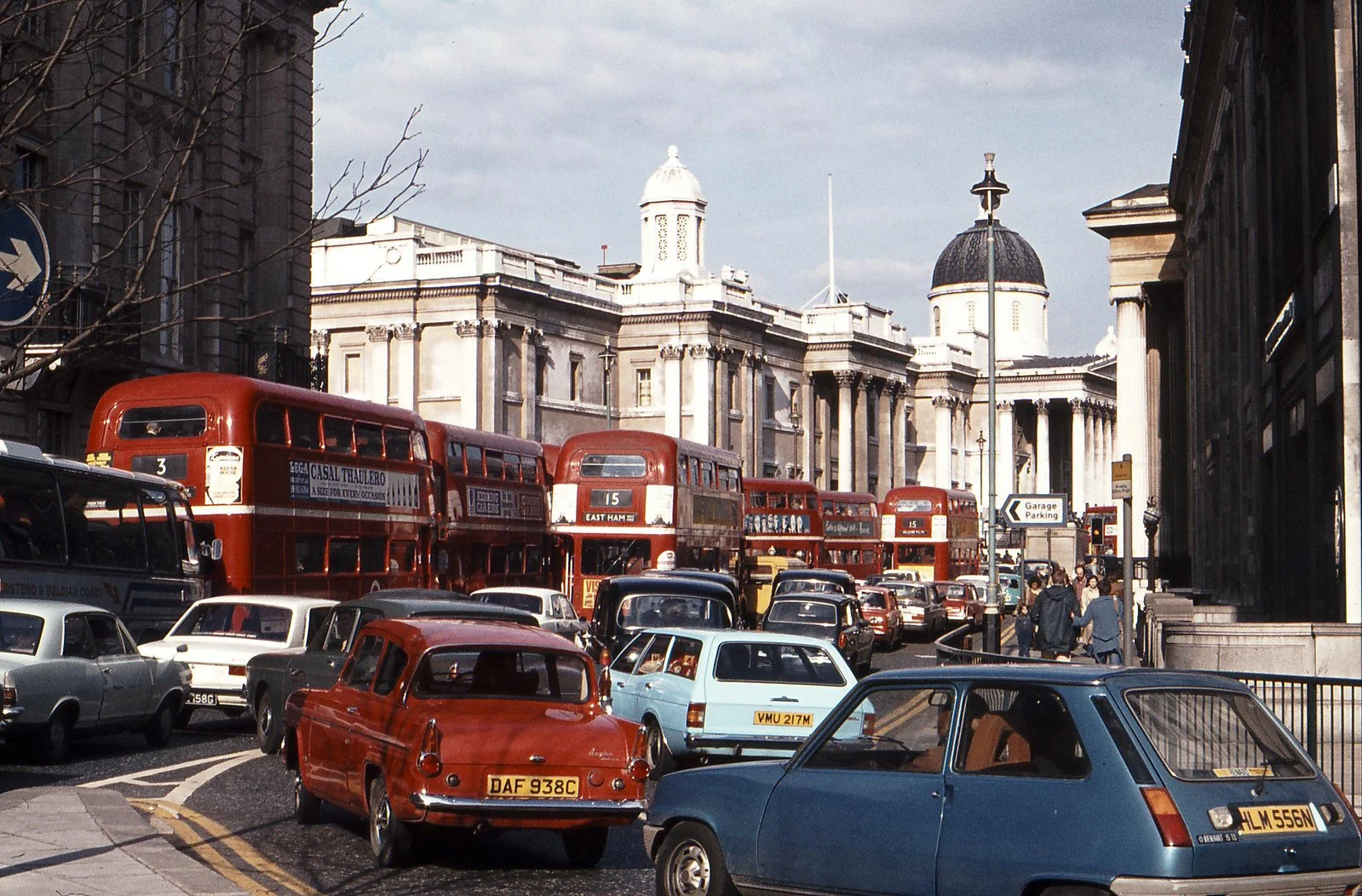
WHO STOLE ALL THE COLOUR?
Cars are grey. Houses are greige. Clothes are oatmeal. Is modern taste becoming more sophisticated, or have we collectively decorated ourselves into a mild depression?At some point, without any public consultation that I can remember, the world turned beige.

Not actually beige, of course. That would be far too decisive. It turned taupe. Greige. Stone. Mushroom. Putty. Oatmeal. Ecru. Warm grey. Cold grey. The colour of a cappuccino somebody has forgotten to drink.
Look around.
The new-build house is grey. Inside it is a cream boucle chair sitting on a cream rug beside a pale oak table. On the table is an enormous beige book nobody has opened and a ceramic vessel containing three dead-looking twigs.
Outside is a grey car.
This is perhaps the strangest part.
Cars used to come in colours. Proper colours. Red. Green. Yellow. Racing green. Burgundy. Navy. There were little sports cars the colour of boiled sweets and enormous American things in turquoise. Even perfectly ordinary family cars could be blue without somebody calling the shade "Midnight Fjord".
Now drive down a motorway and observe the procession.
Black. White. Grey. Grey. Black. Grey. White.
Occasionally something silver passes and everybody gets terribly excited.
What happened?
Who drained the colour out of everything?
I ask this only half jokingly because once you notice it, the beige appears to be advancing on several fronts.
Fashion has succumbed. Restaurants have succumbed. Hotels have succumbed. Children's bedrooms have succumbed. Even children's toys, objects traditionally designed in colours visible from the International Space Station, are now available in tasteful arrangements of sage, sand and oatmeal.
Apparently the four-year-old mustn't interfere with the aesthetic.
Perhaps this is psychological warfare.
Stay with me.
If you wanted to create an obedient population, wouldn't you begin by removing all the red trousers?
Drain the colour from their houses. Put them in identical cars. Give them identical kitchens. Dress them in neutrals. Hand everyone the same rectangular telephone and let them spend six hours a day looking at photographs of other people with the same kitchen.
Eventually nobody would have sufficient spirit left to overthrow anything.
They'd be too busy deciding between Natural Calico and Egyptian Cotton.
Of course, there probably isn't a sinister Ministry of Beige operating beneath an industrial estate in Milton Keynes. The truth may be worse.
We might actually like it.
And perhaps the beigeification of everything is less a conspiracy than a self-portrait.
Modern life is visually exhausting.
From the moment we wake up, something wants us to look at it. Notifications. Advertising. Emails. News alerts. Videos. Logos. Headlines. Messages. A woman you've never met explaining cortisol. A man shouting about cryptocurrency. Somebody reorganising a refrigerator into transparent containers for reasons that remain unclear.
We carry a tiny illuminated carnival in our pockets and consult it approximately every seven minutes.
No wonder we come home and paint the walls the colour of porridge.
Perhaps beige is not emptiness at all.
Perhaps it is sedation.
Our eyes have spent all day being screamed at, so we have constructed homes that whisper.
There is something understandable about that. A restrained room can be enormously beautiful. Natural materials are lovely. Linen is lovely. Stone is lovely. Cream is lovely. Nobody is campaigning against oak.
But why must they all be lovely at once?
Where is the red lacquered cabinet?
The emerald velvet sofa?
The yellow kitchen?
The ridiculous wallpaper?
Where is the room that makes your aunt say, "Well, I wouldn't have chosen it," which is surely one of the highest compliments available in interior decoration?
We have become frightened of getting things wrong.
That, I suspect, is closer to the heart of it.
Colour requires commitment.
A beige sofa says nothing particularly incriminating about you. A purple sofa is evidence.
Paint a room white and you have decorated it. Paint it oxblood and you have made a decision.
And decisions have become dangerous because we now live under permanent observation.
Once, you decorated your sitting room and perhaps forty people saw it over the course of a decade. Now it can be photographed, posted, judged, saved, shared and silently disapproved of by somebody called @minimalistmama84 before the paint is dry.
So we look for reassurance.
We search Pinterest.
We search Instagram.
We save what other people have saved.
The algorithm notices.
It gives us more.
We mistake familiarity for taste.
And eventually five million people independently arrive at the revolutionary conclusion that their kitchen should be sage green.
This isn't limited to interiors. Fashion has suffered from precisely the same nervousness.
There was a time when being rich permitted you to become spectacularly strange.
You could wear purple velvet, drive a yellow Rolls-Royce, collect enormous Chinese vases and have a leopard-print drawing room. Money bought freedom from ordinary taste.
Now wealth increasingly appears to involve dressing as an extremely expensive digestive biscuit.
Camel coat. Cream trousers. Beige cashmere. Tan loafers. Discreet handbag. The whole ensemble communicating that its wearer is far too wealthy to require colour.
Quiet luxury, they call it.
Quiet?
We haven't stopped talking about it for three years.
There are now endless instructions explaining how to look as though you don't care whether anybody knows your clothes are expensive.
This seems rather a lot of effort to communicate indifference.
And perhaps that is what bothers me about beige. Not the colour itself, which is perfectly innocent, but the fear hiding behind its ubiquity.
The fear of vulgarity.
The fear of choosing badly.
The fear of being unfashionable.
The fear of owning something another person might dislike.
We have confused good taste with unobjectionable taste.
They are not the same thing.
Good taste can be outrageous.
It can be dark and peculiar and romantic and funny. It can involve an enormous painting that dominates the room or a coat visible from France. It can be inherited, accidental, sentimental or completely indefensible.
In fact, the most interesting homes, clothes and people usually contain at least one thing that shouldn't work.
A little wrongness is terribly important.
Perhaps colour disappeared because the world became frightening. Pandemic, wars, economic anxiety, climate anxiety, political anxiety, technological anxiety, the peculiar experience of watching artificial intelligence arrive while you're trying to remember your online banking password.
When life feels uncertain, neutrality feels safe.
Don't choose the green car. You'll have trouble selling it.
Don't paint the ceiling pink. You'll get tired of it.
Don't buy the patterned sofa. What if it dates?
What if?
What if you like it?
There is a radical thought.
Your house does not need to appeal to its future purchaser. Your clothes do not need to flatter an algorithm. Your car does not need to resemble every other car in the Tesco car park.
We are only here for an alarmingly brief period.
Surely we cannot spend all of it surrounded by mushroom.
So I propose a small resistance.
Nothing dramatic.
Paint one wall.
Buy the green car.
Wear the red shoes.
Put flowers on the table that have absolutely no relationship with the cushions.
Allow your child's bedroom to contain colours that children actually enjoy.
Choose something occasionally without checking whether the internet approves.
And if there really is a secret organisation somewhere systematically draining the colour from Western civilisation, this should make them extremely nervous.
They can have the greige kitchen.
I'm having the yellow Jaguar.