A GARDEN, DESPITE EVERYTHING
No lawn, no greenhouse, no ancestral estate. No problem.
There is a rather persistent idea that gardening requires land. Preferably quite a lot of it, enclosed by an old brick wall, with a greenhouse leaning romantically to one side and enough room to lose a Labrador. This is excellent news for people with country houses and less useful for the rest of us.
A garden, thankfully, is not measured in acres. It can be a windowsill, a balcony, a collection of pots outside the back door or that peculiar little rectangle of concrete estate agents optimistically call a courtyard. If you can fit a chair and something alive beside it, you are already halfway there.
The trick with a small space is not to treat it apologetically. Three miserable pots pushed against a wall will always look like three miserable pots pushed against a wall. Instead, commit. Fill the place. Grow upwards. Hang things. Let rosemary become enormous. Allow nasturtiums to tumble over edges and climbers to disappear towards the upstairs neighbours. Small gardens become interesting when they feel abundant rather than carefully rationed.
Start with herbs because they are almost absurdly rewarding. Rosemary and thyme enjoy neglect, mint behaves like a minor criminal and should therefore be imprisoned in its own pot, while parsley, chives and sage will quietly improve your dinner for months. Basil is slightly more temperamental, but worth indulging through summer simply for the pleasure of tearing leaves directly into a tomato salad.
Then grow something you can eat. You do not need an allotment to experience the peculiar smugness of eating something you grew yourself. Salad leaves are ridiculously easy. Radishes are quick. Strawberries are perfectly happy in containers. Tomatoes will grow in pots provided they get enough sun, and climbing beans make surprisingly handsome plants while producing an alarming quantity of beans from very little ground.
If you have almost no floor space, look at the walls. A trellis changes everything. Jasmine, honeysuckle, clematis and climbing roses can turn a blank fence into something that feels established and faintly secretive. Window boxes can hold herbs, trailing flowers or strawberries. Shelves and old wooden ladders can accommodate pots at different heights. The smallest gardens work rather like tiny flats: once you run out of room, you go vertical.
Do not buy everything from the garden centre fully grown, either. Part of the pleasure is the waiting. Plant bulbs now for spring. Sow sweet peas. Save seeds. Stick things in soil and see what happens. Gardening is one of the few areas of modern life where delayed gratification remains stubbornly unavoidable. You cannot subscribe to Premium Tulip and have April delivered tomorrow morning.
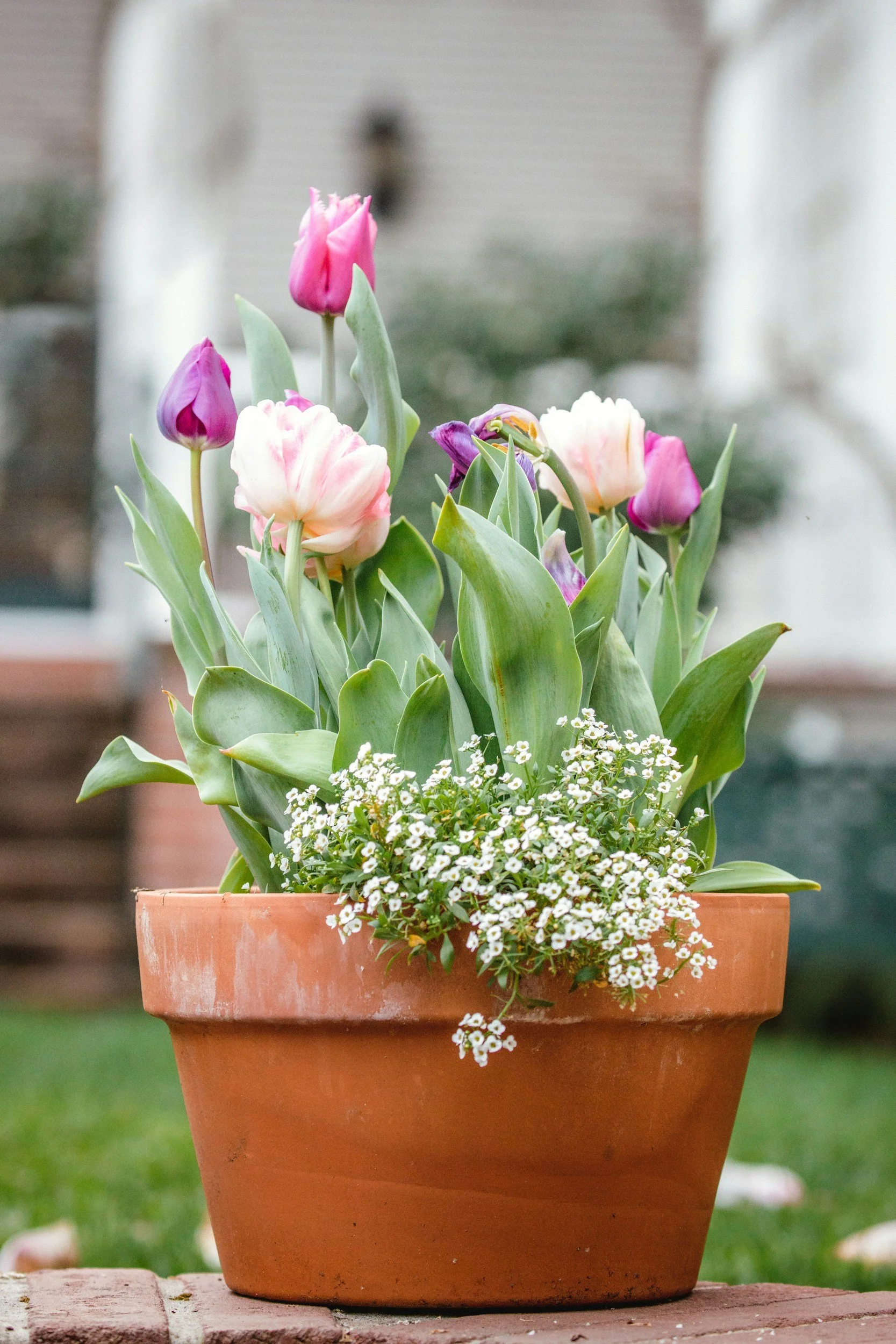
For autumn, which is actually a wonderful time to begin, think ahead rather than assuming the gardening year is over. Plant tulips, daffodils, crocuses and alliums in pots. Tuck violas around the top if you want something cheerful in the meantime. Herbs such as rosemary and thyme will keep going, and a small evergreen shrub can give the whole arrangement some backbone when everything else has retired for winter.
There is also no requirement that your containers come from the gardening aisle. Old terracotta pots are better once they have acquired a bit of age. Galvanised buckets, wooden crates and battered planters can all work provided there is drainage. Avoid making everything match. A small garden with identical grey pots can very quickly begin to resemble the smoking area of a new-build office.
And make room for somewhere to sit, even if that somewhere is one folding chair. This is important. The point is not merely to cultivate plants but to create somewhere you actually want to be. Put a tiny table beside it. Add a lantern. Drink coffee there in the morning. Have a glass of wine there after work. Read three pages of a book before becoming distracted by the fact that something has eaten your basil.
That, incidentally, is part of gardening too. Things die. Slugs arrive. A plant you have lovingly tended for four months suddenly collapses because you looked at it incorrectly. Another plant you forgot existed will become magnificent. Gardening is wonderfully resistant to perfection.
Perhaps that is why even the smallest patch of green feels disproportionately good. You put your hands in soil, pay attention to the weather and begin noticing that one week is different from the next. There are buds, then flowers, then seeds, then nothing, then something again.
You do not need a garden.
You need a pot, some soil and somewhere the sun occasionally turns up.
PLANT THIS IN OCTOBER
TULIPS
October is bulb-buying season. Plant them generously in pots rather than politely spacing six around the edge. The aim is Amsterdam, not municipal roundabout. Try deep reds, almost-black Queen of Night or creamy whites if you prefer things restrained.
DAFFODILS
The gardening equivalent of putting money in a coat pocket and finding it six months later. Plant the bulbs now, forget entirely about them, then feel disproportionately pleased with yourself when they appear in spring. Smaller varieties such as Tête-à-Tête are particularly good in pots and window boxes.
GARLIC
A surprisingly satisfying thing to grow if your garden is essentially a collection of containers. Plant individual cloves into a deep pot in autumn and leave them to get on with it. By next summer, dinner has become horticulture.
VIOLAS
For those unwilling to stare at pots of soil until March. Violas will give you colour through the colder months and can be planted over spring bulbs, so the same pot performs twice. Efficient and rather pretty.
ROSEMARY
Buy one decent plant rather than a tiny supermarket herb destined for an early death beside the kettle. Rosemary is evergreen, smells wonderful, looks handsome in terracotta and provides an excellent excuse to roast potatoes.
SWEET PEAS
Sow some in autumn and keep them somewhere sheltered over winter for stronger plants next year. Come summer, they will climb anything you give them and provide armfuls of flowers for the house. The more you cut, the more they produce, which is the sort of arrangement we approve of.
AND ONE EMPTY POT
Leave yourself one. You will see something you desperately want at a garden centre, steal a cutting from your mother, be given a plant by a neighbour or suddenly decide that what your life has been missing is a fig tree.
Gardens have a habit of expanding to fill the space available. Even when there wasn't much space available to begin with.