Where Have All the Bit-Part Actors Gone?
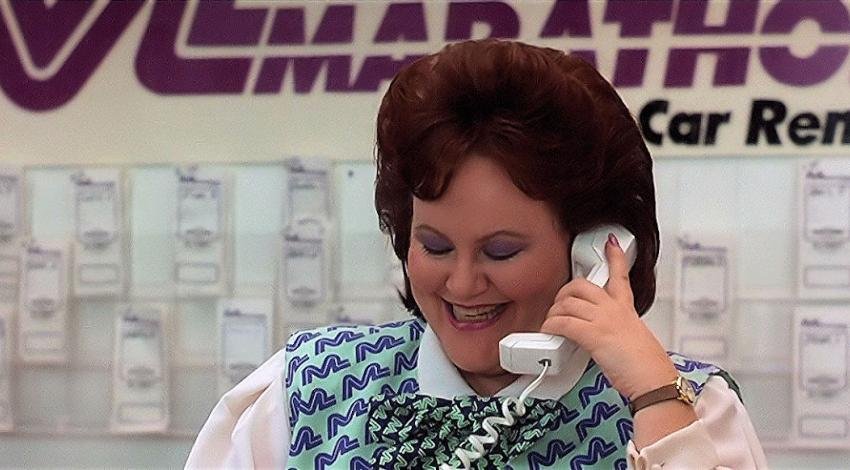
Edie McClurg turning a few minutes behind a rental-car counter into one of the most memorable scenes in Planes, Trains and Automobiles (1987).
Courtesy of Paramount Pictures
Films are full of famous faces. So why do they feel strangely less populated?
There was a time when a character could appear in a film for forty-five seconds, say one spectacularly odd thing and remain lodged in your brain for the next twenty years.
They did not need a backstory, a spin-off series or a dramatic close-up set to a slowed-down pop song. They might be a hotel receptionist, a furious neighbour, an unimpressed nurse, a waiter with appalling timing or a policeman who seemed to have wandered in from a much stranger film. They arrived, delivered a line as though their entire life had led up to it, and disappeared.
They were the bit-part actors — and films were better when they were everywhere.
Go back to the comedies, thrillers and family films of the 1980s, ’90s and early 2000s and the difference is immediately noticeable. The stars are still the stars, but the world around them is crowded with peculiar, specific people. The desk clerk in Home Alone 2. The ticket agent who refuses to be hurried. The neighbour leaning over the fence. The shop assistant who has already decided what she thinks of you. Even the person with three lines has a rhythm, an attitude and quite possibly a regional accent nobody has attempted to soften.
These characters rarely moved the plot forward in any important sense. That was precisely their charm. They made the world of the film feel larger than the story. The hero might be having the worst day of his life, but the woman behind the counter had her own problems and was not about to make them hers.
Today, those encounters increasingly feel functional. A character enters to deliver information, confirm a booking, hand over a key or explain the rules. The lines do their job and the actor vanishes without leaving a mark. If the role is allowed any real personality, it is often given to someone famous enough for us to recognise immediately: a celebrity cameo arriving with a wink attached.
But recognition is not the same thing as character.
The great bit-part actor did not pull you out of the film. They pulled you further into it. You did not think, Oh look, it’s that person from that thing. You thought, Of course this is the man who runs this motel. He has been here for seventeen years, hates the carpet and knows exactly what happened in room six. None of this needed to be said. A face, a pause and the particular way he looked at the lead actor told you everything.
Older British films were especially good at this. They were filled with character actors who seemed to have been born aged fifty-two, already wearing a cardigan and carrying a grievance. American cinema had its own glorious species: the overfamiliar bartender, the exhausted desk sergeant, the receptionist chewing gum as though it had personally offended her. These were not generic “members of the public”. They were people.
And importantly, they were often allowed to be funny without the film announcing that a joke was taking place.
A one-line character could puncture a movie star’s self-importance simply by refusing to be impressed. They gave films friction. The leading man could be handsome, heroic and in possession of the emotional arc, but the taxi driver still thought he was an idiot. That imbalance made everyone more believable.
So where did they go?
Part of the answer may be that modern films are simply more efficient — and efficiency is not always a virtue. Big productions are expensive, tightly engineered and increasingly built around recognisable intellectual property. Every scene must explain something, set up something or remind us of something we were apparently trusted to understand ten minutes ago. A strange little exchange with a florist is easy to lose when the film is busy preparing three sequels and a limited series.
There is also the creeping belief that every memorable face must be monetised. If a role is juicy, cast a star. If the character is popular, give them an origin story. If the audience laughs, turn the moment into content. The bit-part actor belonged to a less anxious kind of filmmaking, one that could introduce an excellent character and then let them leave.
Casting has changed aesthetically too. So many contemporary films appear to take place in a universe where everybody owns the same skincare routine, attends the same gym and has recently been approved by a luxury fashion house. Older films understood the enormous cinematic value of an unusual face. Crooked teeth, heavy lids, an extraordinary nose, a voice like a faulty boiler — these were not imperfections to be corrected but gifts to be cast.
Character actors made a film visually interesting before they had even opened their mouths. They looked as though they had worked, smoked, worried, travelled, been divorced, missed the last bus and developed strong opinions about local government. They brought life with them.
This is not merely nostalgia for a supposedly golden age. There are still wonderful supporting actors, and television often gives them more room than cinema does. But there is a difference between a supporting character and a true bit part. A supporting character is woven into the story. A bit-part character passes briefly through it and somehow proves the world continues beyond the edges of the frame.
That is what films are missing: not more stars, but more strangers.
We need the woman at the hotel desk who has seen everything. The waiter who repeats the specials as though issuing a threat. The aunt nobody remembers inviting. The doctor whose bedside manner suggests a longstanding war with humanity. We need actors who can make five words sound like a complete biography — and directors confident enough to hold the shot for one second longer and let them do it.
Not every character needs a journey. Some of them just need a coat, an opinion and one magnificent line.
Bring back the bit-part actor. Let them steal the scene and then, with absolutely no explanation, never appear again.