FADED GRANDEUR
Forget the perfect interior. The most beautiful homes are inherited, collected, travelled and allowed to grow old.
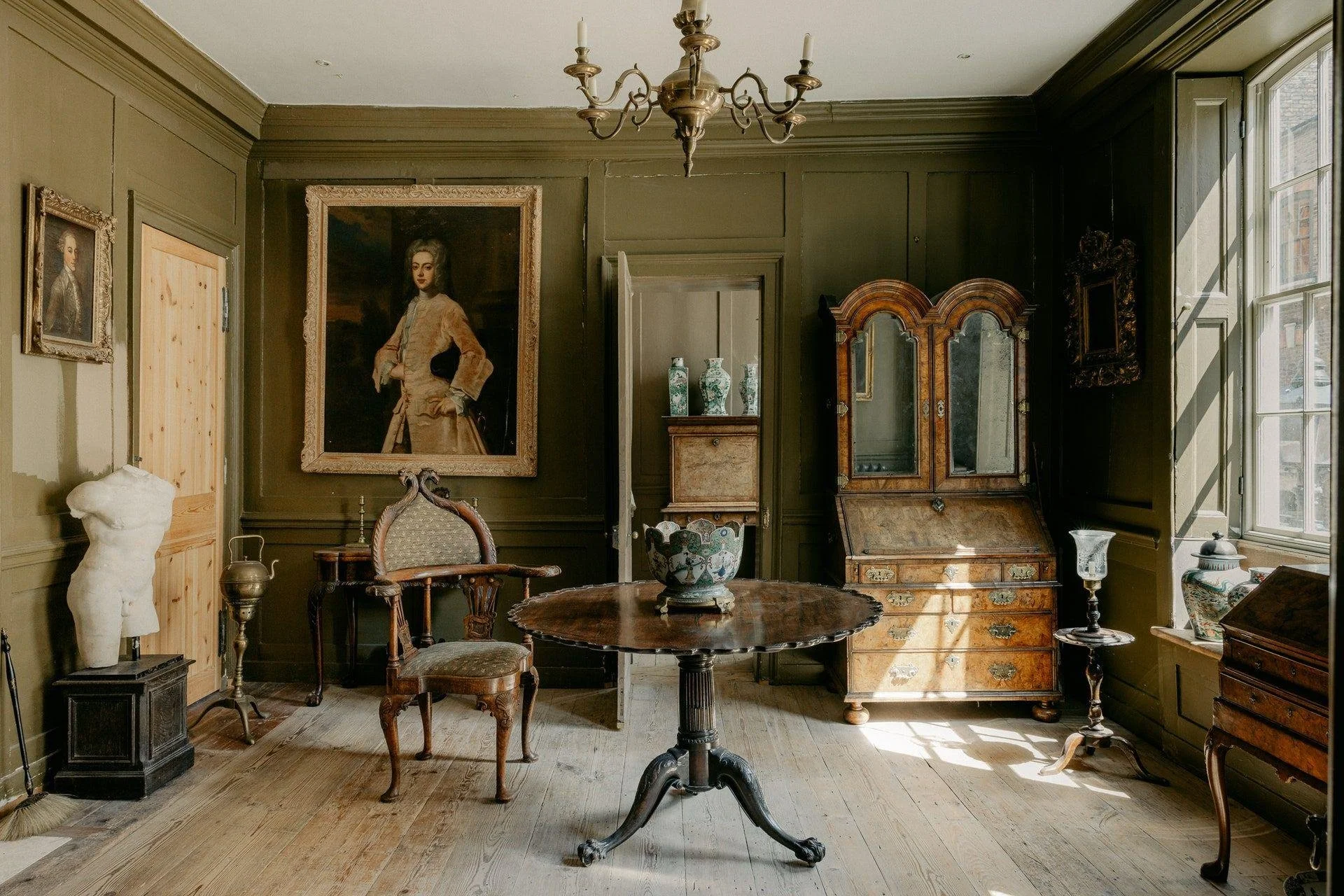
There is a particular kind of house that is almost impossible to recreate quickly. The floorboards are marked from a century of footsteps, the curtains have faded where the afternoon sun reaches them, paintings have accumulated on the walls without any obvious concern for whether their frames match, and somewhere there is an enormous mahogany wardrobe that has been standing in roughly the same place for longer than anyone can remember.
Nothing is quite perfect, and that is precisely why it is beautiful.
This is faded grandeur: not dereliction, nor the deliberately distressed version of country-house style, but the comfortable elegance that comes when good things have been kept for a very long time. Think Georgian townhouses and old rectories rather than palaces; tall sash windows, generous curtains, worn rugs, brown furniture, gilt mirrors, books, paintings, porcelain and objects brought home from travels. The room may contain something genuinely valuable beside something picked up for almost nothing, and nobody feels the need to explain which is which. The look is often associated with grand old houses because they have one ingredient that no decorator can order: time. Yet the philosophy translates remarkably well to an ordinary home. In fact, you don't need a Georgian house at all. What matters is resisting the urge to make everything new.
We have become very good at decorating quickly. A room is treated as a project to be completed: choose the palette, buy the sofa, add the coffee table, order the rug, find some cushions and fill the remaining spaces with objects selected to complete the scheme. The internet has made this extraordinarily easy. We can see a room we like in the morning and have a convincing approximation of it sitting in our online baskets by lunchtime.
The result may be tasteful, but it rarely has much to say.
A house with faded grandeur has been assembled differently. Some things were bought, others inherited. Something came from an auction because nobody else seemed to want it. Another piece was carried home from a holiday. The rug has moved through three houses. A chair has been reupholstered twice. The paintings have nothing obvious in common except that somebody liked each of them enough to hang them on the wall.
The secret is not really maximalism. It is accumulation.
LET THE HOUSE SHOW ITS AGE
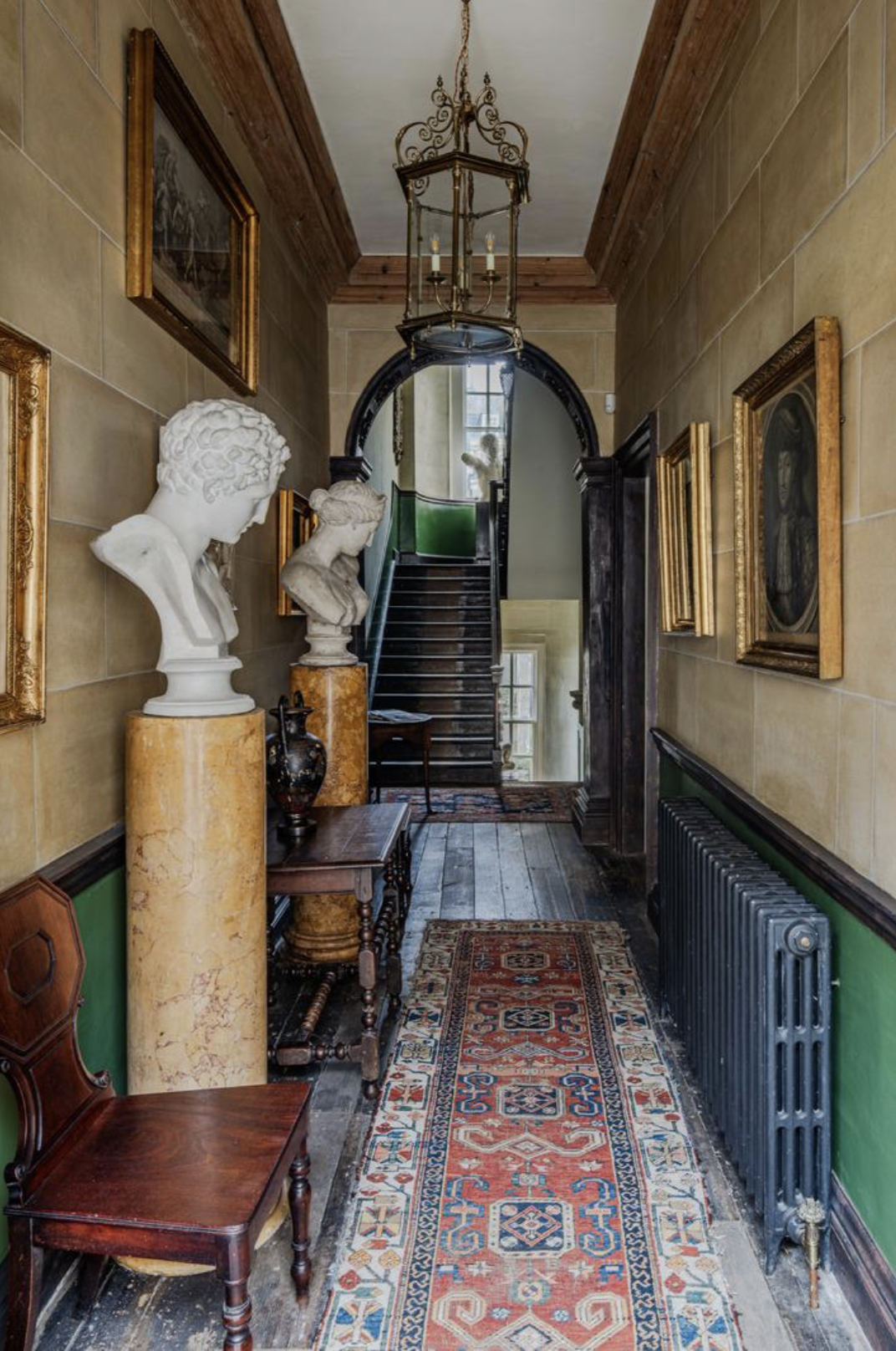
Begin with the building itself. Original floorboards, fireplaces, cornicing, doors, panelling, tiles and old plaster give a room a character that is extraordinarily difficult to manufacture afterwards. If you are fortunate enough to have them, think carefully before removing them.
Old floorboards do not need to be sanded until every trace of their previous life disappears. Put rugs over them and allow the timber to remain visible around the edges. Reclaimed parquet, flagstones and encaustic tiles can introduce the same sense of permanence where original flooring has already been lost. Architectural details such as cornices and panelling can also bring proportion and depth to otherwise plain rooms.
Walls need not look freshly painted either. Limewash, distemper-like finishes and softly coloured matt paints work particularly well because they respond to light differently throughout the day. If you uncover genuinely beautiful old plaster during renovation and it is structurally sound, there can be enormous charm in leaving some of its history visible rather than immediately covering it.
The aim isn't to make a new house pretend to be old. It is simply to stop assuming that perfection is always an improvement.
BUY THE FURNITURE THEY DON'T MAKE ANYMORE
Perhaps the easiest way to begin is with the furniture that fashion forgot.
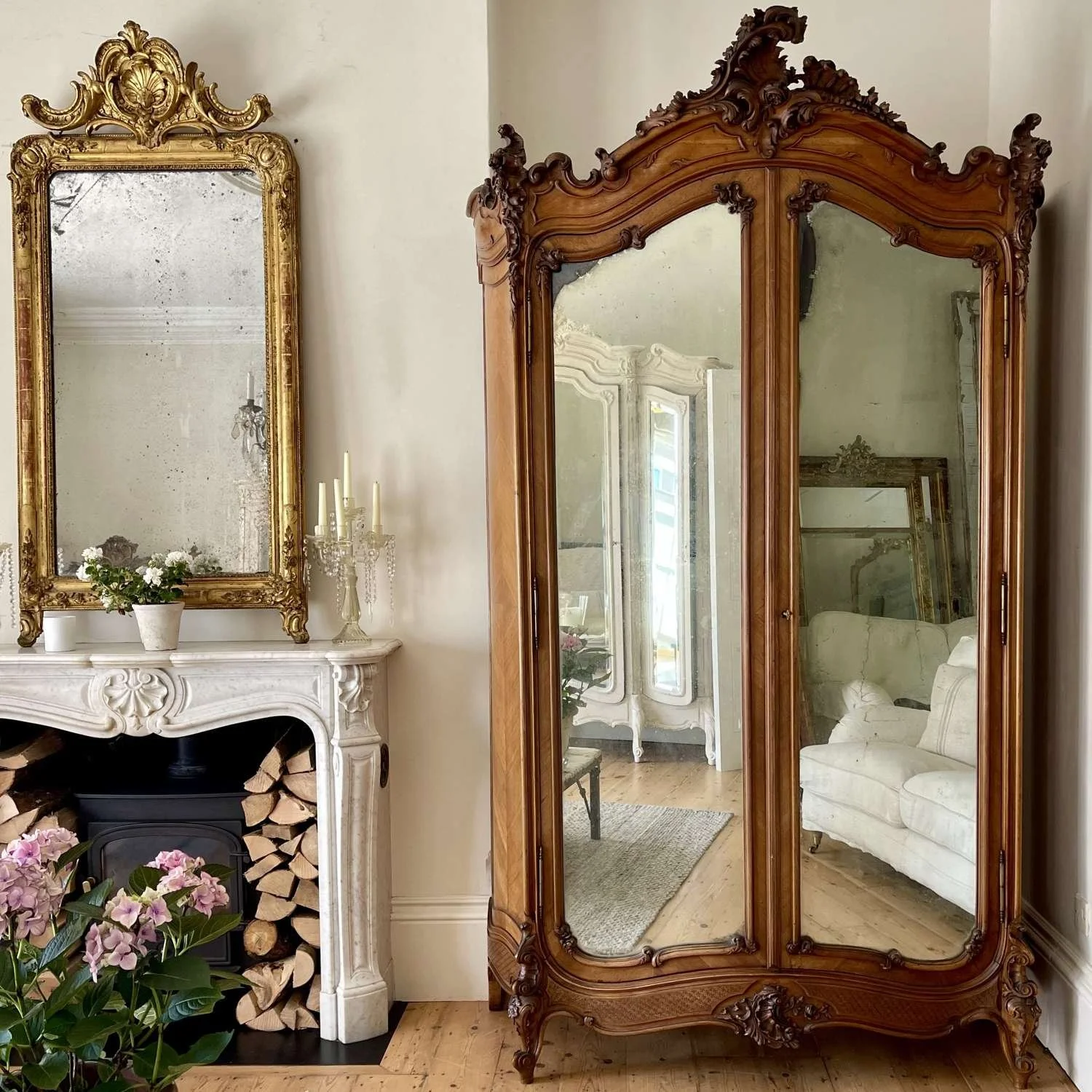
For decades, dark wooden furniture has been dismissed as heavy and old-fashioned. Mahogany wardrobes, walnut chests, rosewood tables, bureaux and linen presses were replaced by pale woods, fitted storage and inexpensive flat-pack furniture. As a result, the second-hand market contains extraordinary pieces of cabinetmaking that can sometimes cost considerably less than their modern equivalents.
There is something wonderfully perverse about buying a new wardrobe designed to last a decade when an unfashionable mahogany one has already survived for 150 years.
Look for proper construction and good materials rather than fashionable names. Open the drawers. Look at the joints. Feel the weight of the doors. Notice the grain of the timber and the brass fittings. A nineteenth-century wardrobe may have panelled doors, internal drawers and beautifully figured veneers; a Georgian chest may still have the handles that have been pulled by generations of hands.
Do not be put off by every mark. There is a difference between structural damage and age. A scratch across a tabletop, softened edges, slight variations in colour and marks around handles are evidence that the object has had a life.
And please don't paint beautiful mahogany because brown furniture isn't currently fashionable. Fashion will change again. The tree took rather longer to grow.
INHERIT BEFORE YOU BUY
Before going shopping, look at what already exists within your family.
Not everything old is good and not everything inherited deserves permanent sanctuary in your sitting room. But we can be remarkably quick to discard things because they belong to another generation's taste.
Look again.
Your grandmother's chest of drawers may be beautifully made beneath the unfashionable handles. An old armchair can be reupholstered. Family photographs can be moved into silver, gilt or old wooden frames. China that has spent twenty years in a cupboard might look wonderful displayed on an open dresser. A painting that seemed terribly gloomy in your parents' house may acquire an entirely different character amongst other pictures.
There is an intimacy to inherited objects that cannot be bought. Their value is not necessarily monetary. It lies in knowing where they came from and whose hands used them before yours.
A home becomes more interesting when not everything in it was chosen by you.
BECOME A MAGPIE
The best way to collect antiques is to enjoy looking for them.
Go to antique centres when you don't need anything. Visit auction-house viewing days. Look through charity shops, flea markets, house clearances and reclamation yards. Search eBay, Facebook Marketplace and Vinterior. Small-town antiques shops and provincial auctions can be particularly good because pieces that would be carefully styled and expensively priced in London may be sitting rather unceremoniously at the back of a room elsewhere.
Homes & Antiques makes a similar point in its own guide to faded grandeur, recommending charity shops alongside antiques dealers and emphasising key antique pieces rather than filling every available space.
Learn to search for what something is, rather than the aesthetic you want it to provide. Don't search for “faded grandeur furniture”. Search for “Georgian mahogany chest”, “Victorian walnut wardrobe”, “rosewood occasional table”, “antique gilt mirror”, “Persian rug” or “Edwardian linen press”.
Once you learn a little of the language, an entirely different world of furniture begins to appear.
And measure before you fall in love. There is nothing romantic about discovering your enormous Victorian wardrobe is four inches wider than the staircase.
DON'T RESTORE AWAY THE HISTORY
Old things need looking after. That doesn't mean making them look new.
Repair the loose joint. Rewire the lamp. Have the chair properly reupholstered when the fabric finally gives way. Clean the painting and wax the timber if appropriate. But be cautious about sanding, stripping and refinishing every imperfect surface.
Patina is partly the accumulation of tiny changes that happen through use. Brass becomes softer, silver tarnishes, leather darkens and timber changes colour. Old mirrors acquire foxing; rugs become less brilliant where people have walked across them; fabric gradually fades beside a window.
These are not necessarily flaws to correct.
The distinction is between preserving an object and erasing its age. Faded grandeur depends upon allowing beautiful things to look as though they have been around for a while.
BUY ART, NOT WALL DECORATION
Nothing makes a room feel more personal than pictures, and nothing makes one feel more recently decorated than art bought principally because it matches the cushions.
You do not need an important collection. In fact, obscurity is part of the pleasure.
Look for small oil paintings, anonymous landscapes, portraits, engravings, architectural drawings, botanical studies and sketches at auction houses, antique fairs and flea markets. Buy the slightly strange portrait because you cannot stop looking at it. Buy the tiny landscape because it reminds you of somewhere. Ignore the signature unless it matters to you.
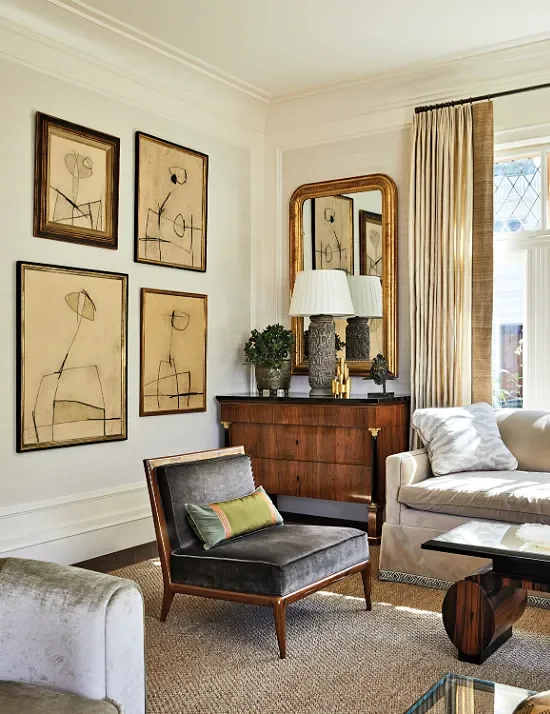
Old frames are equally useful. Dark wood, gilt, ebonised frames and slightly battered mounts create depth on a wall that a row of identical frames rarely achieves.
And don't plan the arrangement too carefully. Great houses accumulated pictures because successive generations kept adding them. Allow yours to do the same. Begin with three, add another when you find it and move things around when necessary.
A wall that takes ten years to finish will almost always be more interesting than one completed in an afternoon.
BRING YOUR TRAVELS HOME
The great European houses are filled with evidence of travel. The aristocratic Grand Tour brought paintings, sculpture, books and decorative objects back into British houses, where pieces from completely different cultures and periods were absorbed into existing rooms.
We can borrow the principle without the eighteenth-century shipping budget.
When travelling, forget the conventional souvenir and look for something you would genuinely want in your home. A ceramic bowl from Greece, linen from Italy, an old religious print, a little landscape found at a flea market, hand-painted tiles, glassware, a textile or something bought directly from its maker.
It doesn't need to be expensive. It needs to remind you of somewhere.
Twenty years later these things become the most personal objects in the house. You remember the shop, the market, the person you were travelling with and the logistical absurdity of getting the thing into your suitcase.
Eventually the house becomes a sort of autobiography.
MIX THE GRAND WITH THE ORDINARY
Faded grandeur dies when everything becomes precious.
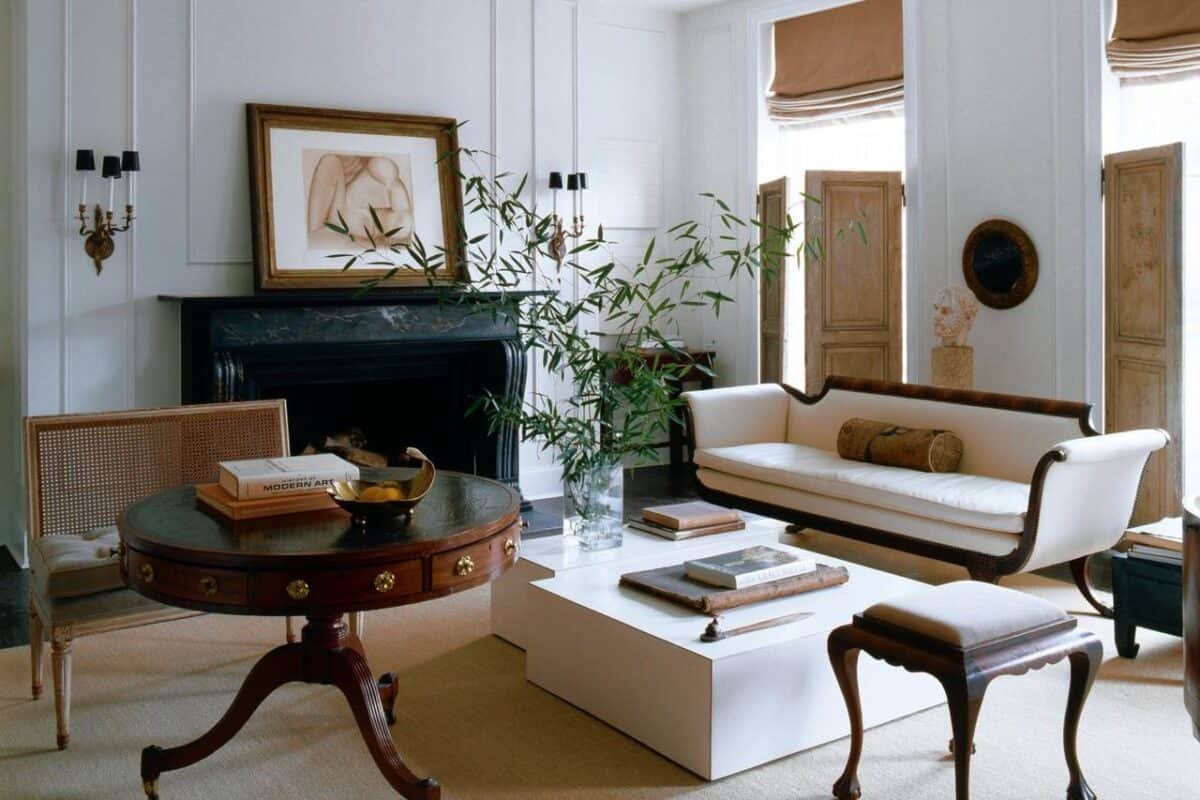
A gilt nineteenth-century mirror can hang above a battered pine table. A beautiful Persian rug can sit beneath an inexpensive sofa. Children's drawings can appear amongst oil paintings. An antique chest can support a modern lamp. A grand chandelier can hang over the kitchen table.
This is what stops a house becoming a period set.
Real homes contain contradictions because lives contain contradictions. We inherit things from different generations, buy according to different budgets and change our minds. There is no reason everything should belong to the same century.
In fact, it is usually better when it doesn't.
LAYER THE FABRICS
This is where faded grandeur becomes softer.
Old houses rarely contain a single textile story. There are rugs, curtains, upholstery, cushions, throws and lampshades, often in patterns that theoretically shouldn't work together but somehow do.
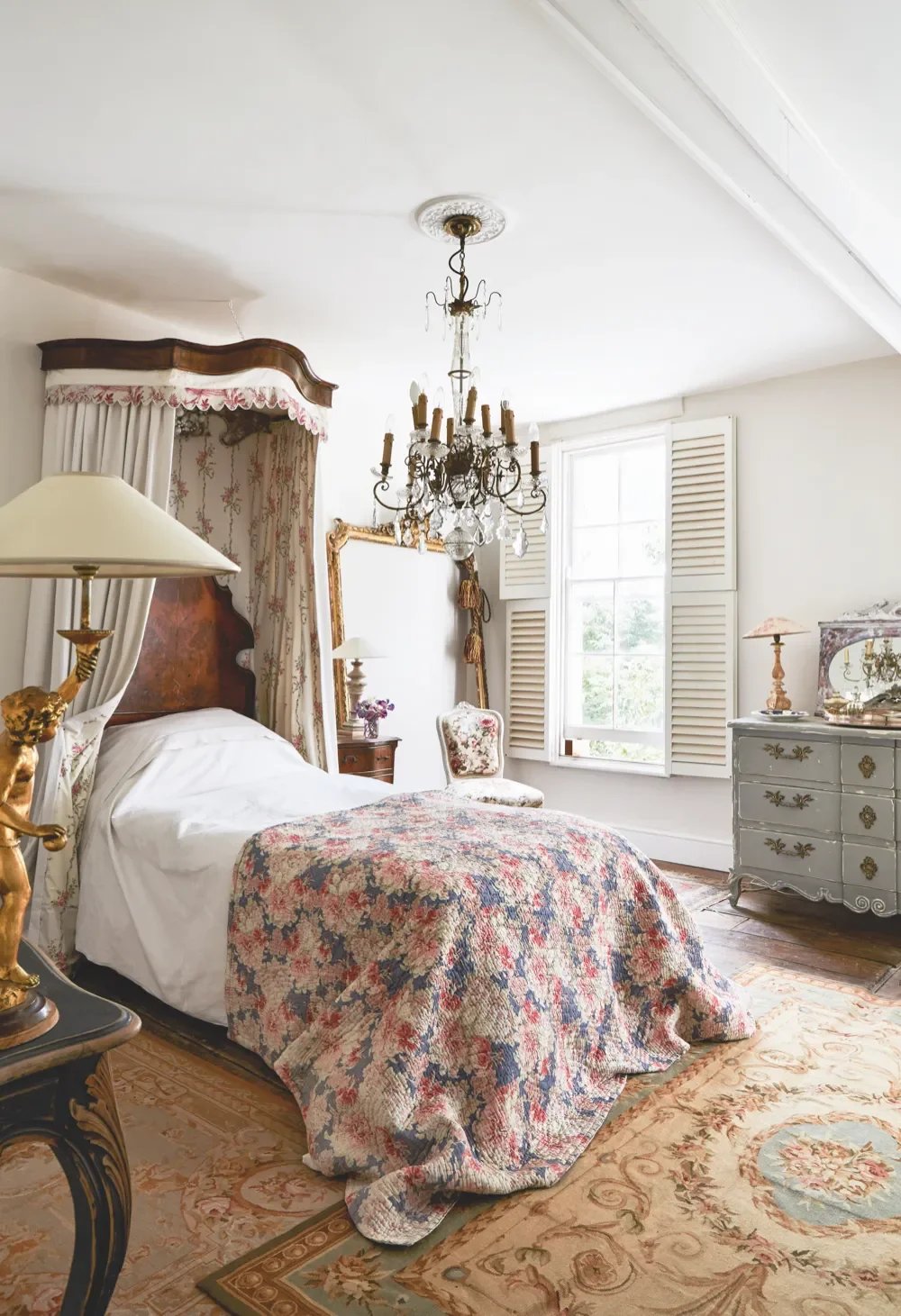
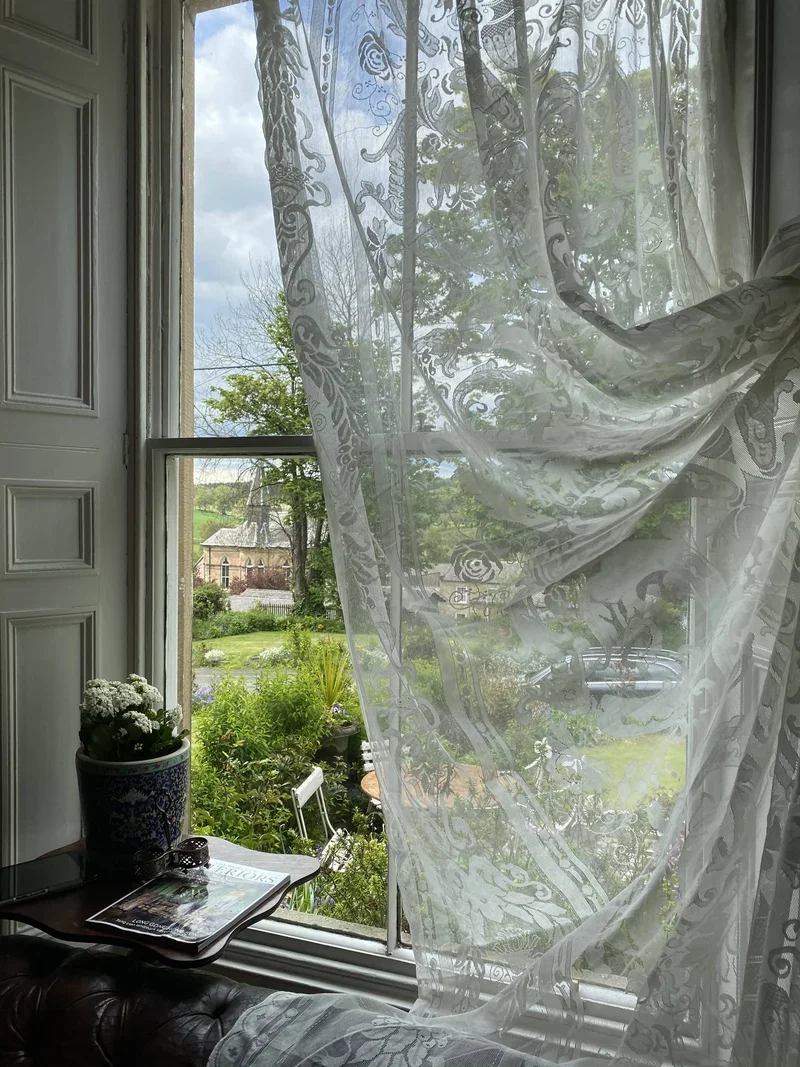
Use natural materials wherever possible: linen, cotton, wool, velvet and silk. Look for old textiles too. Antique curtains, embroidered panels and hand-worked fabrics can be reused carefully, while old rugs bring colour, pattern and age to otherwise simple rooms. Layering faded florals, toile and other patterns rather than making everything match is one of the traditional ingredients of this look.
Curtains should feel generous rather than mean. Lamps benefit enormously from fabric shades. An old sofa can become something extraordinary in the right textile.
And don't be frightened when fabric begins to fade. Sometimes the side of a curtain bleached by twenty summers is considerably more beautiful than it was when new.
GIVE EVERY ROOM SOMETHING SLIGHTLY WRONG
Perfect taste is terribly dull.
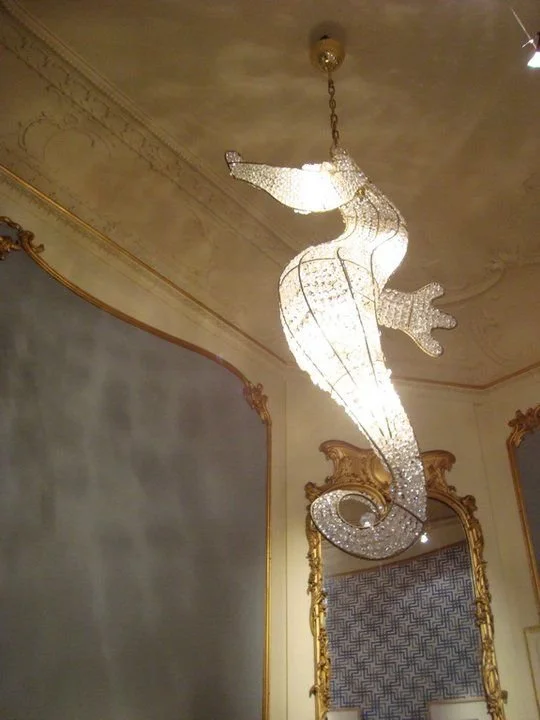
A memorable room often contains one thing that appears to have wandered in from somewhere else: an absurdly large portrait in a small bedroom, a chandelier that is far too grand for the kitchen, a modern photograph surrounded by eighteenth-century furniture or an enormous urn that serves no conceivable purpose.
The object needn't be expensive. It simply needs personality.
This is where your house stops looking as though an interior designer could have produced precisely the same room for somebody else.
DON'T OVERFILL IT
There is a temptation to interpret faded grandeur as maximalism and start filling every surface.
Resist it.
Grand old rooms often work precisely because the architecture is allowed to breathe. A beautiful chest against an otherwise empty wall has presence. A single enormous mirror may be better than six smaller objects. Even the practical advice from Homes & Antiques cautions against overfilling the space.
Accumulation should happen naturally. It is not the same thing as clutter.
Leave somewhere for the next thing to go.
ABOVE ALL, DON'T BUY 'FADED GRANDEUR'
Once an aesthetic acquires a name, somebody will sell you a new version of it.
There are new rugs artificially faded to resemble antique ones, mirrors manufactured with faux foxing, newly made cabinets deliberately distressed at the edges and wallpapers printed to imitate crumbling plaster. Some are beautifully made, and reproduction has its place, particularly where original materials are impractical.
But an entire room of simulated age rather misses the point.
Don't manufacture a history when you can acquire the real thing gradually.
Buy the unfashionable mahogany chest. Keep the wardrobe. Rescue the old picture. Have the chair reupholstered. Bring something peculiar home from your holiday. Accept the silver from your mother. Go to the auction. Keep the books. Leave the scratches in the table.
Most importantly, don't try to finish.
A house assembled in this way should always feel slightly unresolved because life itself is unresolved. There will be another picture, another journey, another inheritance, another object unexpectedly encountered in the back of an antiques shop.
That is the real luxury of faded grandeur. It cannot be bought as a complete look because one of its most important materials is time.
The aim isn't to make a house look old. It is to fill it with things good enough to grow old with you.