DO NOT DISTURB
In defence of heavy room keys, silver coffee pots, properly stocked bars and the increasingly rare pleasure of being looked after.
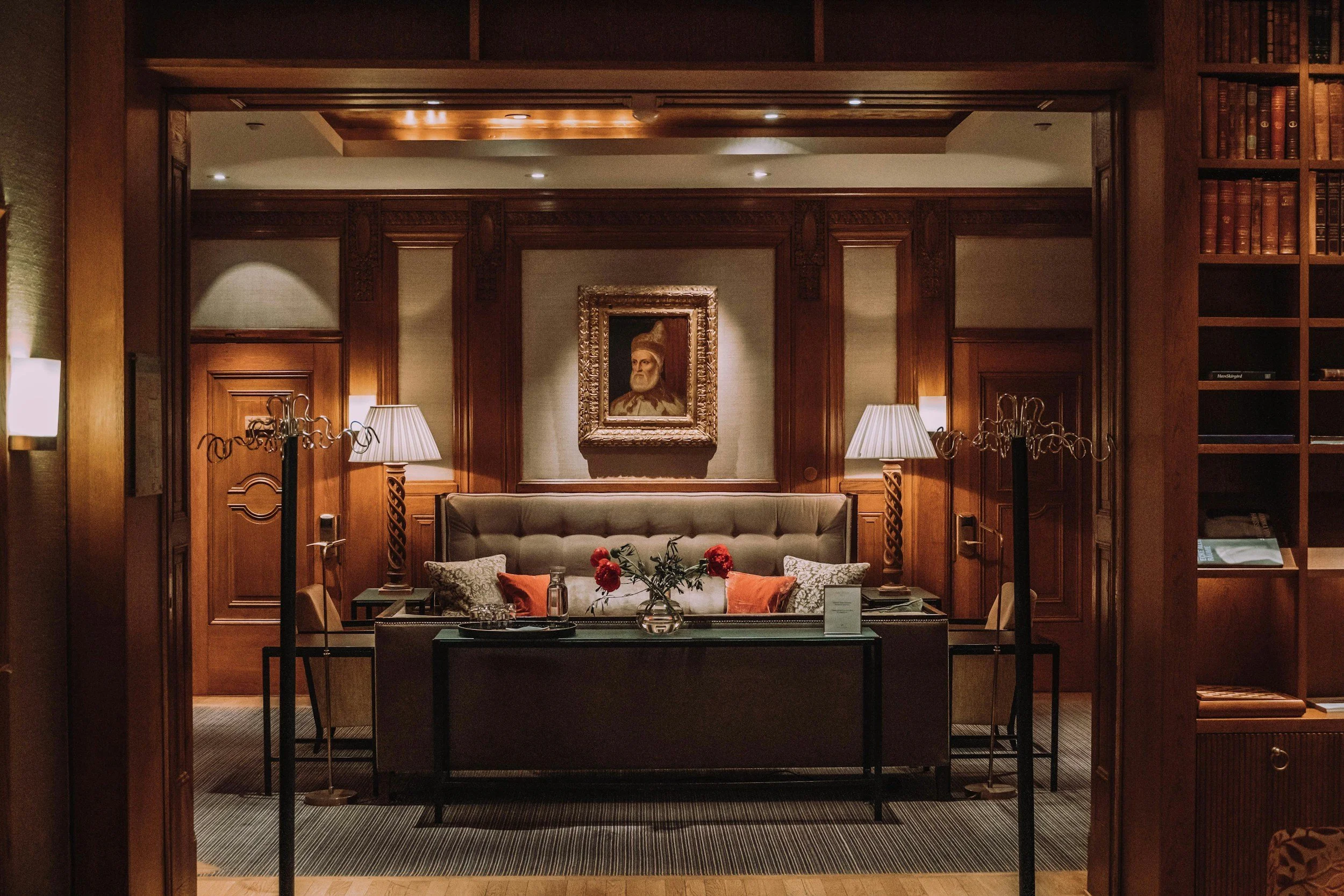
A hotel should make you behave slightly differently from the moment you walk through the door. You should lower your voice without knowing why, briefly consider ordering a martini despite it being four in the afternoon, and develop an entirely unreasonable interest in whether somebody is going to carry your bag. For the duration of your stay, breakfast in bed becomes perfectly respectable, sitting alone in a lobby counts as an afternoon's activity, and taking a bath before dinner feels less like personal hygiene and more like an event. There was a time when hotels understood this instinctively. You arrived rather than merely checked in. Somebody opened the door, somebody else mysteriously knew your name, your suitcase disappeared and rather wonderfully reappeared upstairs. A heavy brass key waited behind the desk and there was absolutely no suggestion that you might like to download an app. The great hotel has never merely sold bedrooms. That would make it a very expensive form of storage. What it sells is the opportunity, for two nights or perhaps a fortnight if things are going particularly well, to inhabit another life. This is why certain hotels loom so large in the imagination. Claridge's, the Ritz in Paris, the Carlyle in New York, the Cipriani in Venice: these places understand that hospitality is essentially theatre, and that the guest has paid to be both audience and cast member. There are flowers large enough to require their own postcode, porters who have seen absolutely everything and possess the good manners to mention none of it, and bars in which having a drink at four in the afternoon seems not only acceptable but positively sensible.
The best hotels make ordinary behaviour feel glamorous. Reading a newspaper becomes an activity. Taking a bath becomes an event. Drinking coffee in bed feels vaguely continental. Even leaving your shoes outside the door can result in their miraculous return looking better than they have since 2007. Naturally, modernity has been doing its best to improve all this. Check-in can now be completed on a screen. The room key has migrated to the telephone. Menus are hidden behind QR codes. Room service, if it survives at all, occasionally arrives in packaging that suggests you have ordered noodles at a railway station. All of this is efficient, economical and probably very clever.
It is also rather boring.
A LITTLE UNNECESSARY-NESS
A proper hotel understands the importance of things nobody technically needs. You do not need a silver coffee pot. You need coffee. You do not need thick writing paper embossed with the hotel's address because you are almost certainly not going to write a letter. Nobody requires a man in a beautiful coat to carry a suitcase containing three shirts and a toothbrush. And yet remove all of these things and something peculiar happens. Luxury becomes expensive convenience. The old rituals mattered precisely because they were unnecessary. A postcard in the desk drawer, matches from the bar, a shoe bag, a bottle opener heavy enough to stun a burglar, a bathrobe one could conceivably wear to court — these tiny extravagances told you that ordinary domestic rules had temporarily been suspended.
This is surely one of the principal reasons for going away.
BRING BACK THE LOBBY
Then there is the lobby, one of civilisation's great inventions. A good hotel lobby allows you to sit for an unreasonable amount of time while appearing to have somewhere important to be. You can read, wait for somebody, watch people arrive or order a drink at an hour when ordering one elsewhere might invite questions. Most importantly, a lobby contains people who are not staying at the hotel. This is what gives it life. Hotels should leak into their cities. Locals come in from the rain, somebody conducts an affair badly in the corner, a woman in enormous sunglasses waits for a taxi, an American asks the concierge where he can find “somewhere authentic”, and a dog behaves as though it owns the building. Unfortunately, modern interiors have developed a slight horror of anyone sitting somewhere without immediately monetising the experience. Lobbies become co-working spaces, concept stores or restaurants with booking systems. Every chair appears to have been assigned a commercial purpose.
But idleness is part of the pleasure. A grand hotel ought to provide somewhere to waste an afternoon beautifully.
AND FOR GOODNESS SAKE, KEEP THE BAR
The hotel bar may be even more important. There is a particular glamour to it because nobody quite belongs there. The man beside you could live two streets away or have arrived from Buenos Aires that morning. Somebody is waiting for somebody. Somebody has been stood up. Somebody has ordered champagne for reasons that are none of your business. Unlike many fashionable bars, a hotel bar should also permit the increasingly radical activity of arriving without a reservation. You sit at the counter. The bartender asks what you would like. You have a martini. Civilisation continues. And being alone in a hotel bar is somehow entirely different from being alone almost anywhere else. Sit alone in a family restaurant on Saturday evening and people may wonder whether your date has died. Sit alone at the bar of a grand hotel with a whisky and a newspaper and you appear to know something they don't. No wonder films adore them. Hotels are full of narrative possibilities because everybody is between places. People arrive, disappear upstairs, meet strangers and leave without explanation. Hitchcock understood it. Sofia Coppola understood it. Wes Anderson built an entire mythology from it.
A Premier Inn beside the M25 may struggle to produce quite the same effect, although one should never rule anything out.
THE HUMAN BUSINESS
Ultimately, however, the art of the hotel has very little to do with marble bathrooms. The truly luxurious part is being looked after by somebody who is exceptionally good at looking after people. A concierge should know not merely which restaurant has five stars online but which one you will actually like. A bartender remembers what you drank yesterday without making the achievement seem remotely remarkable. The doorman recognises you when you return. Housekeeping enters a room containing wet towels, an exploded suitcase and evidence of a minor breakfast catastrophe and restores order with the discretion of MI6. These people are practising something technology has become remarkably bad at replicating: judgement. We spend much of contemporary life attempting not to speak to anybody. We scan our own shopping, order dinner through an application, check ourselves onto aeroplanes and spend forty minutes arguing with a chatbot because a parcel has vanished somewhere outside Coventry. Against this background, genuine hospitality begins to feel almost indecently luxurious. Perhaps this is why the best hotels remain so seductive. They preserve a little friction where friction is pleasurable. Someone takes the key. Someone pours the drink. Someone brings breakfast upstairs beneath a silver cloche even though everybody involved knows perfectly well that a plate would do. The great hotel understands that efficiency isn't always the point. Nobody has ever returned from Paris misty-eyed because the check-in process was exceptionally streamlined. We remember the barman who made one final drink, the ridiculous bath, the pianist downstairs, the breakfast we ate in dressing gowns at eleven, or the afternoon we spent doing absolutely nothing in a lobby while pretending it counted as sightseeing.
A great hotel provides a bed, certainly. But if that's all you remember about it, somebody has rather missed the point.