DOES EVERYTHING LOOK THE SAME?
You’re not imagining it. You travel three thousand miles, order a coffee and realise you could quite easily be in Margate.
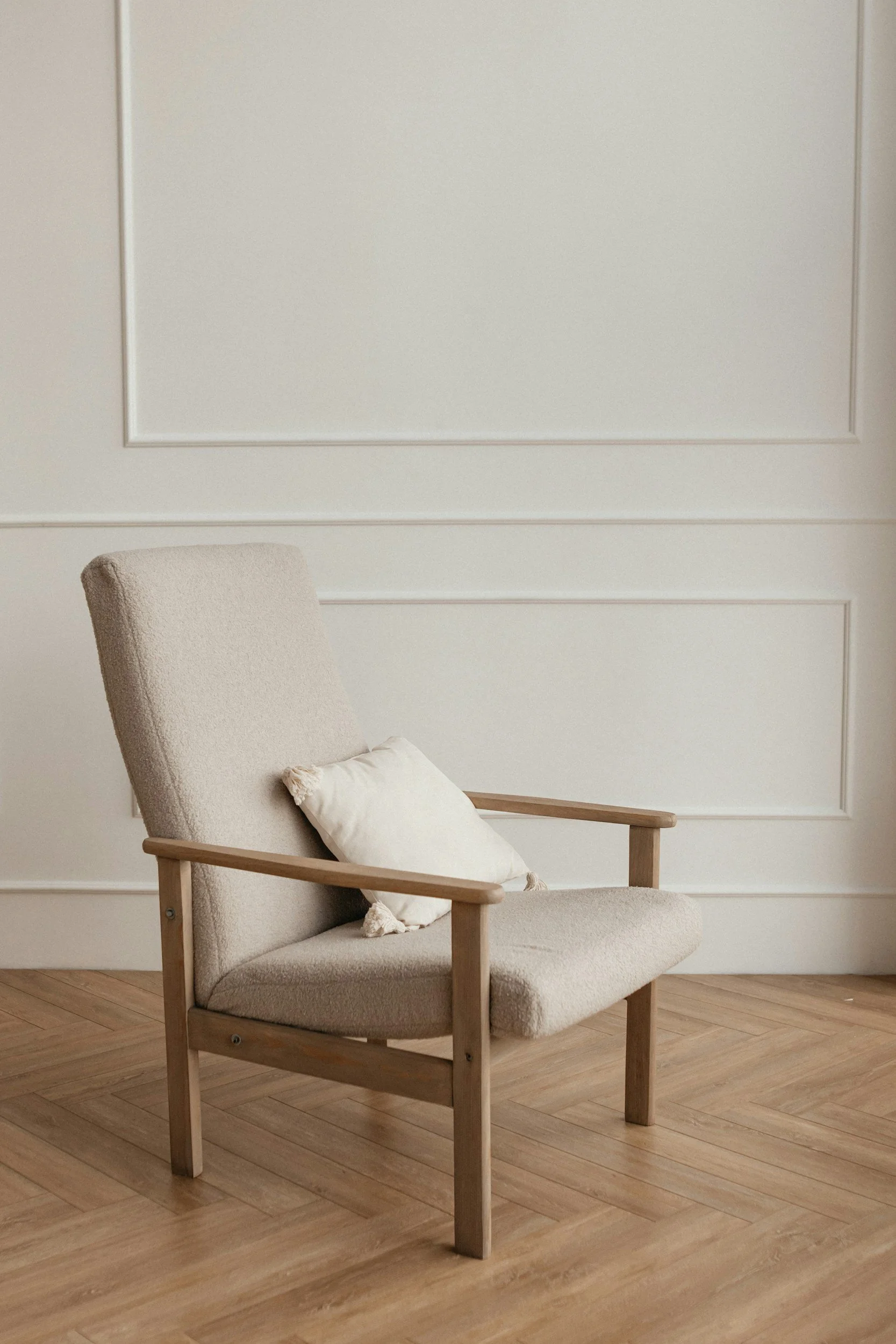
I went into a café recently and knew what it was going to look like before I opened the door. There would be a counter made from some expensive-looking pale wood, a stainless-steel surface, a small vase containing a single branch and a row of pleasingly imperfect ceramic cups. The walls would be the colour of porridge. The menu would be written in a font so discreet that ordering a coffee would require an eye test.
I was right about almost everything. There was also an olive tree.
The olive tree has become rather worrying.
It is now possible to walk into a café in London, Copenhagen, Lisbon, Melbourne or New York and have absolutely no idea where you are. There will be microcement. There will be linen. There will be a chair that looks vaguely Danish. The staff will be wearing chore jackets and somebody will be making a flat white with the concentration of a neurosurgeon (what a legend)
None of this is unpleasant. This is important. These places are usually lovely. I like linen. I like ceramics. I have nothing personally against pale oak.
I would just quite like to know which country I'm in.
The same thing is happening to hotels, restaurants, shops and houses. Perhaps even people. We have become extremely good at knowing what good taste looks like and, as a consequence, good taste has become remarkably easy to predict.
Twenty years ago you might have entered someone's house and discovered that they had inexplicably painted the dining room purple. There would be a sofa they had inherited from an aunt, some curtains chosen in 1987 and a deeply alarming ceramic cat beside the fireplace. You might have hated half of it.
But you would remember it.
Now there is a reasonable chance the house will contain the same bobbin chair you saved on Instagram last week.
I am not entirely innocent here. None of us are. Give me ten minutes on Pinterest and I too become convinced that my life would be transformed by an eighteenth-century French cupboard, preferably photographed in a Italian house with a bowl of apples nearby.
The problem begins when several million of us are looking at the same cupboard.
Before the internet, taste travelled rather slowly. You saw somebody's house. You bought a magazine. You went to a hotel. You noticed a woman on the train wearing an extraordinary coat and spent the rest of the journey wondering where she'd found it.
Now we see everything, all the time.
An apartment in Stockholm appears on Instagram before breakfast. At lunchtime we're looking inside a hotel in Puglia. By dinner we've watched an Australian woman renovate a house in Provence, although we don't know who she is, why she bought it or why we have spent seventeen minutes watching her choose a tap.
The algorithm notices.
You looked at one striped sofa, so presumably you would like to see 600 striped sofas. You paused over a woman in loafers and suddenly every woman on earth appears to be wearing loafers. You save one Georgian kitchen and your phone decides you are a minor aristocrat restoring a rectory in Wiltshire.
Eventually it becomes difficult to know whether we actually like something or have simply seen it often enough to stop resisting.
And this has escaped from our screens into the real world.
There is now a particular kind of shop that might sell skincare, coffee, spectacles, expensive socks or candles that smell of libraries. From outside, it is impossible to tell. The façade will be tasteful. The logo will be tiny. Inside there will be one enormous table with four products on it and a member of staff who looks slightly surprised that you have entered.
Everything will be called a studio.
Restaurants have their own version. Plaster walls, bentwood chairs, little lamps on the tables, plates designed for sharing and a menu containing at least one vegetable that has been “burnt”. Carrots, in particular, are having a terrible time.
Hotels aren't immune either. You can now fly to the other side of the world and stay somewhere designed to look exactly like somewhere you stayed last year. Travertine bathroom. Linen sheets. A vaguely rustic stool with absolutely no discernible purpose. A freestanding bath positioned somewhere that makes you wonder whether the architect has ever actually had a bath.
The great irony is that we travel partly because we want to encounter difference, then immediately search Google for somewhere that looks reassuringly familiar.
You arrive in Rome and search for “best speciality coffee Rome”.
You are in Italy. Have an espresso.
The saddest casualty of all this may be local ugliness.
I mean that sincerely.
The terrible carpet in an English pub, the plastic chairs outside a Greek taverna, the peculiar curtains in a French hotel, the slightly terrifying wax tablecloth in an Italian café — these things matter. They belong somewhere.
Not everything needs rescuing by a tasteful person with a Pinterest account.
There is a lovely arrogance in regional bad taste. It doesn't care whether you approve. It existed before you arrived and will hopefully still be there after you've gone.
Perhaps that is why genuinely eccentric people are so compelling too. They have somehow escaped the moodboard.
The best-dressed person at a party is rarely wearing the outfit most people would choose. Their trousers are too wide, their jewellery is ridiculous, their coat appears to have belonged to a dead duke. Something is off, and that is exactly why you keep looking at them.
The same is true of memorable houses. Things don't quite match. The furniture comes from different centuries. There are books nobody arranged according to spine colour. Someone has hung a painting too high and apparently lived happily with the consequences.
Real taste contains mistakes.
It also contains history. Your grandmother's chair doesn't know that brown furniture is out. The bowl you carried home from Athens is unaware that the kitchen is supposed to be minimalist. The strange painting you bought for £40 at an auction does not coordinate with anything.
Good.
The answer isn't to reject Instagram, sack the interior designer and begin buying ugly things as an act of resistance. That would become tiresome very quickly, and somebody would inevitably open a shop in East London selling deliberately ugly things for £1,200.
It is simply to leave a little room for accident.
Go into the antiques shop without searching its stock online first. Choose the restaurant because the man outside looks friendly. Buy something on holiday without checking whether it will work with the sitting room. Keep an object that is unfashionable because you happen to love it. Occasionally allow somebody else's taste to infiltrate your own.
And perhaps stop photographing every nice café you enter. The algorithm already knows too much.
We have access to more beauty, design and inspiration than any generation before us. That should make the world gloriously varied. Instead, if we aren't careful, we may end up with one enormous international neighbourhood stretching from Margate to Melbourne: limewashed walls, natural wine, tiny logos, tasteful ceramics and an olive tree slowly dying in the corner.
Personally, I'm rooting for the ceramic cat.