BITTER CHRISTMAS
CINEMA
Pedro Almodóvar turns the camera towards himself in a film about grief, inspiration and the uncomfortable question of who really owns a story.
There has always been something intensely personal about Pedro Almodóvar's cinema. His films may be meticulously constructed, the apartments almost impossibly beautiful, the colours considered down to the smallest object, his characters dressed with the precision of a fashion editorial but beneath all that control there has usually been something messier going on. Desire, jealousy, illness, mothers, lovers, abandonment and grief have supplied him with material for more than four decades. With Bitter Christmas, he begins to wonder whether taking material from life is quite as innocent as artists like to believe.

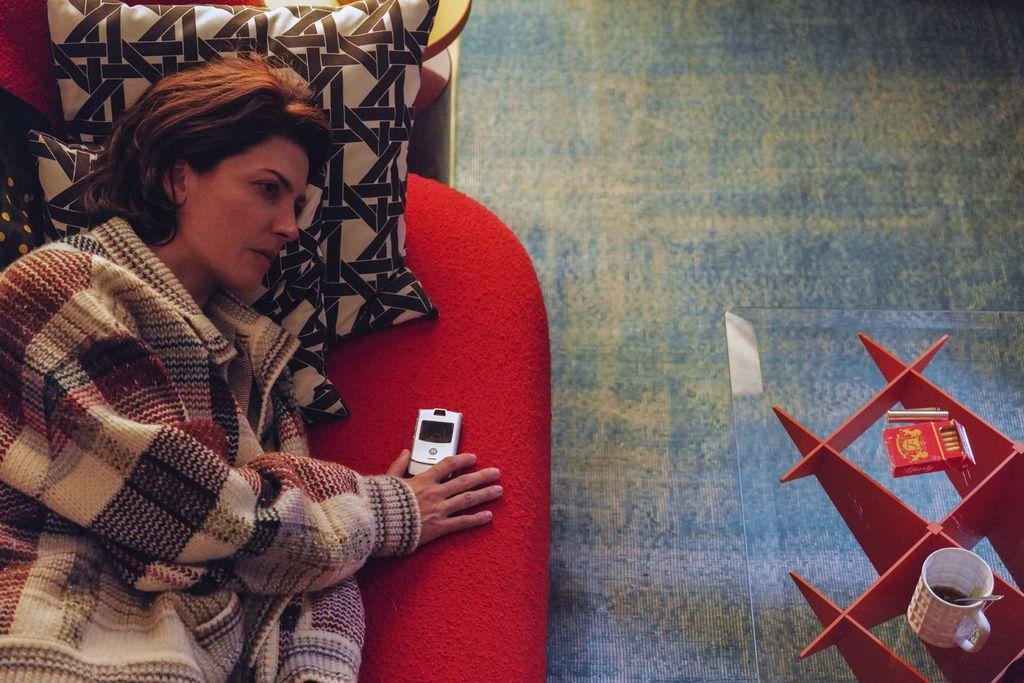
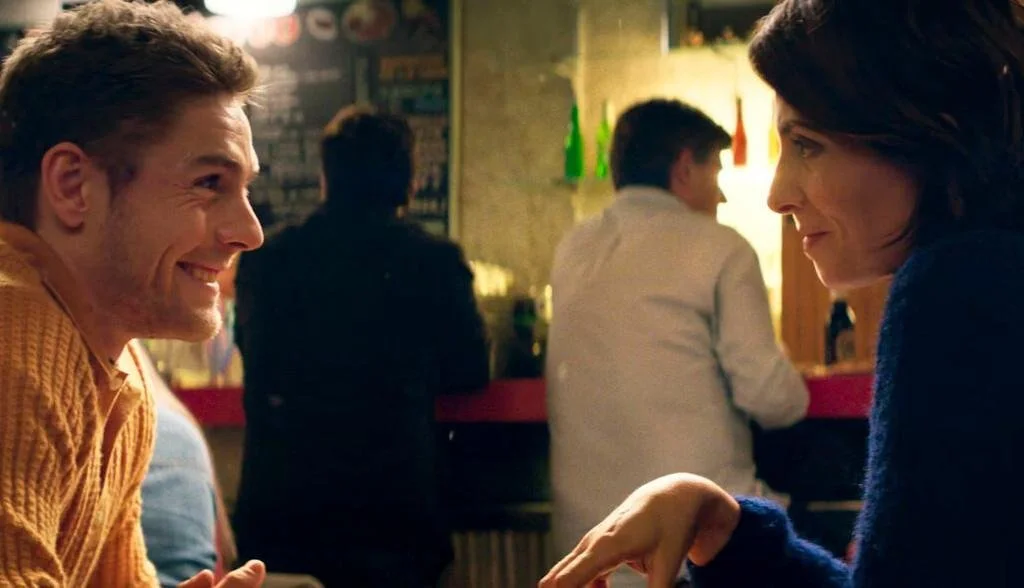
The film moves between two periods and two filmmakers. In 2004, Elsa, played by Bárbara Lennie, is an advertising director who has drifted away from making films. She is suffering from debilitating migraines and has recently lost her mother, although rather than allowing herself to grieve she continues working. Around her are a boyfriend, Bonifacio, and friends whose own relationships and losses gradually begin to find their way into the screenplay she hopes will return her to cinema.
Then Almodóvar pulls us out of her world. It is 2026 and Elsa herself is part of somebody else's screenplay. Raúl, played by Leonardo Sbaraglia, is an established director struggling through a creative drought, and the film we have been watching is the film he is trying to write. Elsa is partly his invention and partly his alter ego; her friends have their origins in the people closest to him. Raúl is not simply borrowing from life, he is quietly rearranging other people's experiences until they become his own material.
It is a wonderfully uncomfortable idea because Almodóvar makes very little effort to disguise whom Raúl represents. The resemblance is deliberate, and the director has described the character as an alter ego. After a career spent transforming memories, relationships and observations into fiction, he appears interested in examining the morality of the process itself. At what point does observation become appropriation? Does suffering cease to belong entirely to you once you tell it to a writer? And is an artist capable of being present in somebody else's life without some part of them standing to one side, quietly taking notes?
These questions could have produced a film that was unbearably self-important. Fortunately, Almodóvar has never been especially interested in making austere cinema. Bitter Christmas remains funny, strange and visually seductive even when it is considering some rather unpleasant things about its creator. There is something amusingly vain about a filmmaker making a film about a filmmaker worrying that filmmakers might be too interested in themselves, and Almodóvar seems perfectly aware of the absurdity.
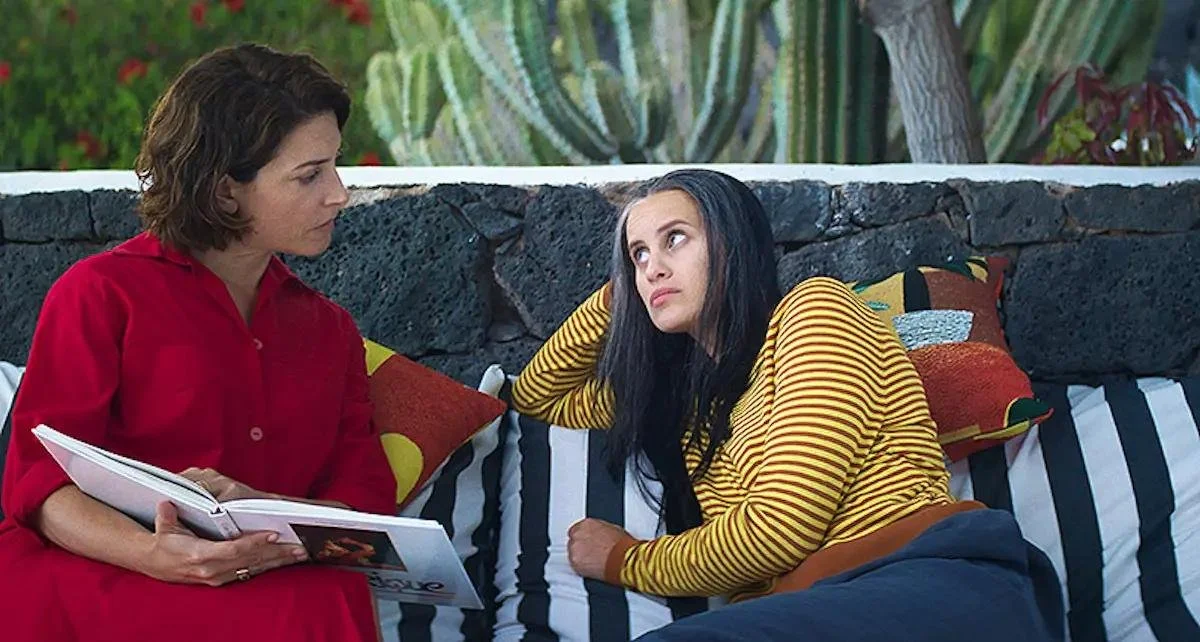
It also looks magnificent. His cinema has always understood interiors as an extension of character, and here production designer Antxón Gómez creates spaces that appear inhabited rather than merely decorated, despite their extraordinary beauty. There is a subtle change from the visual Almodóvar we may think we know best. The famous reds and yellows have not disappeared entirely, but blues, greens and greys are more prominent, lending the film a cooler, more melancholic atmosphere. Furniture, paintings and architecture are allowed almost as much personality as the people living amongst them, with locations in Madrid and Lanzarote becoming part of the emotional landscape rather than handsome backgrounds.
Lanzarote is particularly well suited to him. Against its black volcanic earth and strange, almost lunar landscape, the immaculate interiors and carefully dressed bodies of his characters begin to look slightly unreal. Almodóvar has filmed there before, most memorably in Broken Embraces, and his return gives Bitter Christmas an atmosphere quite different from the warm domestic Madrid interiors associated with much of his work.
There is grief here too, although it arrives indirectly. Elsa's mother's death sits underneath her relentless work, while the suffering of other characters becomes complicated by the knowledge that it may eventually be transformed into fiction. Almodóvar is interested not only in what grief does to the person experiencing it, but what happens when another person observes it. Writers have always stolen from life. Families recognise themselves in novels; lovers discover conversations reproduced years later; friends tell stories that eventually belong to characters they have never met. Bitter Christmas asks whether changing the names is really enough.
For anyone who makes things, this is probably the film's most interesting provocation. The usual romantic idea of the artist suggests that everything is material. An overheard conversation, a childhood memory, the end of a marriage or somebody else's terrible Christmas might eventually become a photograph, a novel or a scene in a film. We tend to celebrate the artist's ability to notice these things. We spend less time considering how it feels to be the person who was noticed.
Almodóvar does not offer a particularly clean answer, perhaps because there isn't one. Art has always fed on life, including the lives of people who never volunteered to become art. What makes Bitter Christmas compelling is that the director does not place himself safely outside that problem. At 76, with a body of work substantial enough to secure his place in cinema history, he could easily have made another beautifully controlled melodrama and left the mechanics of its creation invisible. Instead, he has chosen to show us the slightly indecent business of turning experience into story.
It isn't as emotionally overwhelming as All About My Mother, nor does its autobiographical territory have quite the aching quality of Pain and Glory. The structure occasionally makes us conscious of the machinery behind it, and there are moments when one suspects Almodóvar is more fascinated by the puzzle than we are. But perhaps that is appropriate for a film about the compulsion to create. Artists are not always reasonable people when confronted with material.
What remains unmistakable is the pleasure of watching a director who still believes cinema should look like cinema. In an era when films increasingly arrive designed to sit comfortably on the same screens as everything else we watch, Almodóvar continues to care about colour, rooms, clothes, faces and the precise arrangement of objects within a frame. Even when he is interrogating his own methods, he cannot resist making the interrogation visually interesting.
There is a pleasing contradiction in that. Bitter Christmas questions whether artists are entitled to turn life into something more elegant, dramatic and meaningful than it really was, while spending nearly two hours doing exactly that.
Almodóvar may not solve the problem. He does, however, make a persuasive case for going to the cinema to think about it.
BITTER CHRISTMAS
Written and directed by Pedro Almodóvar
Starring Bárbara Lennie, Leonardo Sbaraglia, Aitana Sánchez-Gijón, Victoria Luengo, Patrick Criado, Milena Smit and Quim Gutiérrez
In UK and Irish cinemas from 28 August 2026.