WHO IS BOND?
Before they decide who should play the next James Bond, perhaps we should remember who 007 actually is.
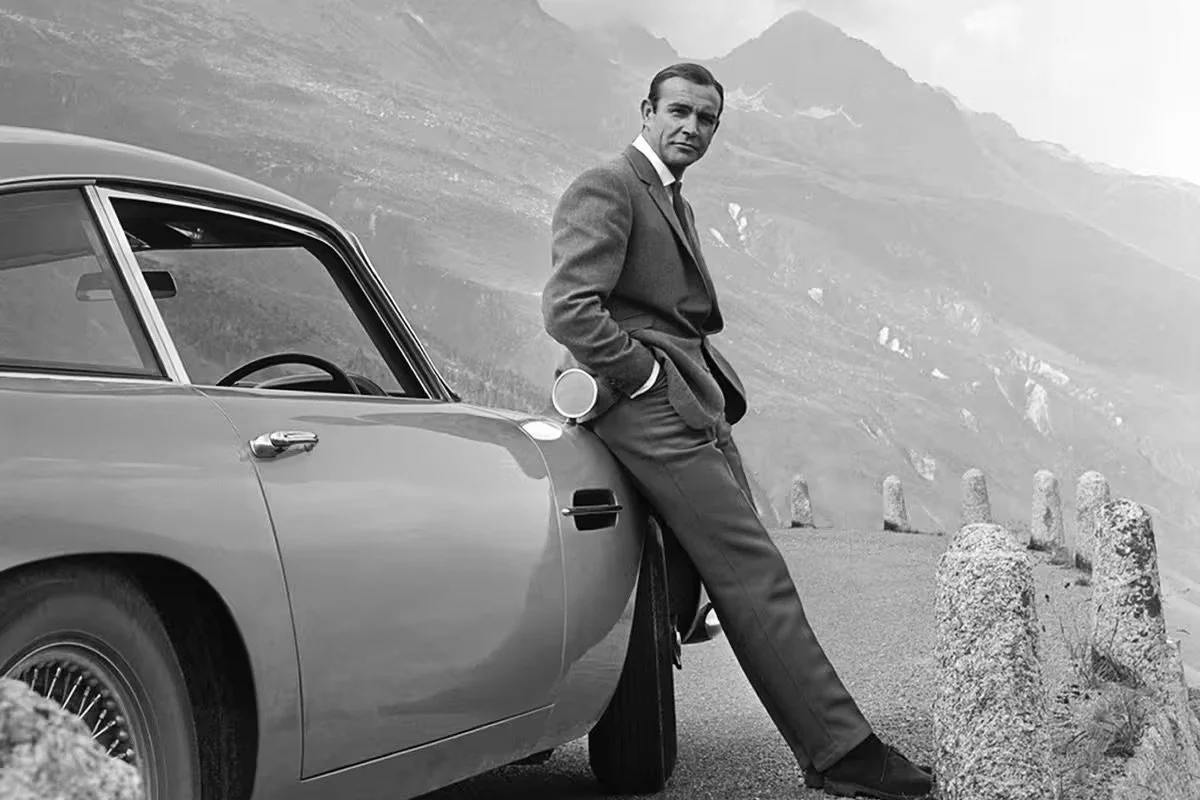
Sean Connery Goldfinger
Every few years, Britain participates in a peculiar national sport. A James Bond vacancy appears and almost every well known handsome British actor between twenty five and forty five is immediately measured for a tuxedo. The names change, but the conversation rarely does. Can he wear a suit? Is he handsome enough? Does he look convincing holding a Walther PPK? Somebody produces a photograph of him in black tie, the bookmakers shorten the odds and for several weeks the internet collectively decides that the case is closed.
But perhaps we are asking the wrong question. The next James Bond should not be chosen because we can already imagine the actor as Bond. He should be chosen because, once he appears on screen, we can no longer imagine anybody else.
WHO IS JAMES BOND?
Strip away the Aston Martin, the martini and the dinner jacket and Bond becomes considerably more interesting. He is not a superhero. He has no extraordinary powers. He is a government employee with an unusually dangerous job, an expensive wardrobe and a complicated relationship with authority.
Ian Fleming's Bond was educated, observant, particular and often rather difficult. He understood food, drink, clothes and gambling, but his appreciation of beautiful things was never simply decoration. Bond knows quality because he pays attention. That distinction matters. The next actor should not look like somebody who has been dressed in an expensive suit for a premiere. He should look like somebody who knows why the suit is good.
Bond's elegance has always worked best when it appears instinctive. Sean Connery could wear evening clothes without looking as though he had spent the afternoon discussing them with a stylist. Roger Moore made refinement look almost mischievous. Daniel Craig's Bond was rougher around the edges, but even he understood that a beautifully cut dinner jacket could coexist with considerable violence. Bond should possess taste without appearing particularly impressed by luxury. The hotel suite, the watch and the car should interest us more than they appear to interest him.
HANDSOME, BUT NOT TOO HANDSOME
Bond is attractive. There is little point pretending otherwise. But conventional perfection may actually be the enemy. The face needs something in it: danger, amusement, arrogance, sadness, and ideally some combination of all four.
Connery had it immediately. There was something slightly threatening beneath the polish. He could smile without becoming entirely reassuring. Craig possessed a different version of the same quality. His Bond looked as though violence had consequences. The next actor needs a face that becomes more interesting the longer the camera remains on it. Not a model playing a spy, but an actor whom a photographer would want to keep photographing.
There should also be something we cannot immediately read. Bond has always depended upon a certain distance between himself and everyone around him, including the audience. Charm is necessary, but complete accessibility is not. We should want to know more about him without ever being entirely certain that we do.
LET HIM BE BRITISH
Bond is a peculiarly British fantasy. Not because Britain has exclusive ownership of spies, tailoring or emotionally unavailable men, but because the contradictions within Bond make sense here. He is establishment and outsider, servant of the Crown and habitual rule breaker, impeccably mannered and capable of extraordinary brutality. He understands the codes of a particular world while never appearing entirely comfortable inside it.
His Britishness should not become parody. We do not need another exaggerated accent or endless reminders that he knows which fork to use. It should simply be there, in the humour, the restraint and the peculiar ability to treat catastrophe as though making too much of a fuss would be terribly embarrassing.
Bond's humour is especially important. He should be funny, but he should rarely seem to be trying to make us laugh. The wit comes from understatement, from knowing exactly how absurd a situation is and refusing to acknowledge it too enthusiastically.
HE NEEDS TO BE AN ACTOR
This sounds obvious. It isn't. Bond has become such an enormous cultural object that casting can easily become an exercise in finding somebody who looks right in promotional photographs. But the next Bond may have to carry the character for a decade, and looking good stepping out of an Aston Martin will only take him so far.
He needs to age, fall in love, be frightened, be funny without telling jokes and walk into a room and alter its temperature without saying anything. Most importantly, he needs to be able to do almost nothing. Some of the most compelling Bond moments involve watching rather than fighting: sitting at a card table, noticing somebody across a room, realising that something is wrong and choosing not to reveal it.
That requires presence, and presence is difficult to manufacture. Bond needs an actor capable of making stillness interesting.
WHICH IS WHY WE SHOULD NOT KNOW HIM
This is where the endless casting lists lose us. The next Bond should, ideally, be somebody whose name causes millions of people to immediately search for him. Not completely inexperienced, because Bond is too demanding for that, but relatively unknown.
There is precedent. Sean Connery was hardly an international movie star when Dr. No arrived in 1962. What audiences encountered was not a celebrity temporarily wearing Bond's clothes. They encountered James Bond. That becomes considerably harder when an actor arrives carrying fifteen years of other characters, advertising campaigns, interviews and celebrity with him.
A lesser known actor gives Bond something increasingly rare: mystery. We should not already know everything about the man playing him. We do not need to know who he dates, what his house looks like, what he eats for breakfast or what he wore to three hundred previous red carpets. We should be allowed to meet him as Bond.
There is something exciting about imagining the lights going down and seeing a face that does not immediately bring another franchise or famous character into the room with it. Within twenty minutes, that stranger could become James Bond. That transformation is far more interesting than watching an established star demonstrate that he can play him.
NOT A YOUNG BOND
Unknown does not mean boyish. Bond needs enough life behind his eyes to make the character credible. He has travelled, killed people, been frightened and learned not to show it. He understands how powerful people behave because he has spent years around them. There should be experience beneath the polish.
Casting too young risks turning Bond into an origin story, and we do not particularly need to see James Bond learning how to become James Bond. There are enough films devoted to explaining how famous characters acquired their watches, scars and personality traits. Bond is more compelling when he simply arrives already formed.
Mid thirties feels about right. Young enough to inhabit the role for years, but old enough that a certain amount of damage is believable. We need not witness everything that made him. In fact, it is probably better if we don't.
DON'T REINVENT HIM TO DEATH
Every new Bond arrives accompanied by discussion about how the character must change. Of course he must. The world Bond inhabits has changed enormously since 1962, and the films have always reflected the anxieties, technology and politics of their time. A Bond frozen permanently in the attitudes of Ian Fleming's Britain would cease to be interesting very quickly.
But evolution is not the same as embarrassment. There is sometimes a strange anxiety around inherited characters, as though the only way to make them contemporary is to apologise for what made them compelling in the first place. Bond can still like women. He can still drink. He can still be vain, difficult, dangerous and occasionally wrong.
Characters do not need to possess impeccable modern opinions. They need to be interesting. Bond's flaws are not an unfortunate historical inconvenience to be written out of him. They are part of the tension of the character. The challenge is not to make Bond harmless enough for the present, but to understand what remains fascinating about him and place that man convincingly within it.
THE CLOTHES MATTER
Of course they do. Bond without the clothes would still be Bond, but something important would be missing. The dinner jacket, beautifully made shoes, watch and coat are not simply product placement. At their best, they tell us something about the man wearing them.
The next Bond should return to a quieter kind of elegance. Less obsession with labels and less sense that every object has arrived accompanied by a press release. More tailoring that simply fits beautifully, shirts that look better after several hours, proper evening clothes and a coat worth keeping for twenty years.
Bond should make men want to dress better without making them feel that they need to buy everything he is wearing. His style should be aspirational because of the way he wears clothes, not because somebody has carefully informed us how much they cost.
The same is true of the cars, hotels and watches. Luxury works in Bond because he moves through it without awe. He has been here before. That nonchalance is essential to the fantasy.
AND THEN THERE IS VILLENEUVE
There is reason to be optimistic. Denis Villeneuve understands scale, but he also understands silence. His films are interested in atmosphere, masculinity, obsession and people carrying things they cannot quite articulate. That could suit Bond extraordinarily well.
With Steven Knight writing, there is also an opportunity to rediscover some of the harder edges of the character without simply repeating Daniel Craig's version. The temptation after such a successful era will be either to imitate it or reject it completely. Neither seems particularly interesting. Bond has survived for more than sixty years on screen precisely because each incarnation has found a slightly different man beneath the same name.
Perhaps the next film does not need to make Bond bigger. Perhaps it needs to bring him closer again. A man entering a room in a beautifully cut suit. Somebody watching him from the other side of it. A brief exchange in which very little is said and quite a lot is understood.
For the first few seconds, none of us should quite know who he is. No baggage, no familiar face and no feeling that we have already met this man in three other franchises.
That is how we would like to meet the next James Bond. Not as the winner of a celebrity casting competition, but as a stranger.
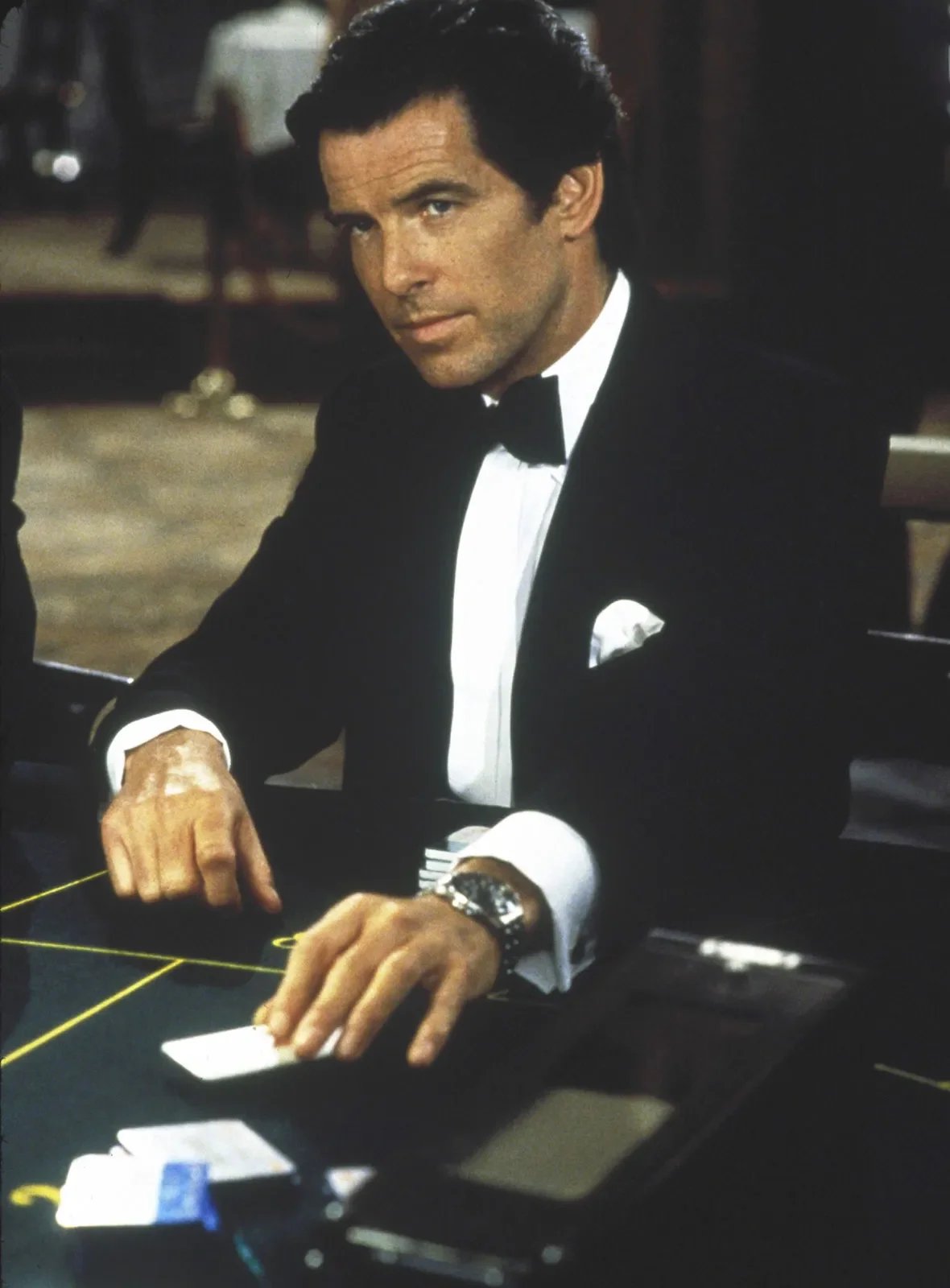
Pierce Brosnon Goldeneye