DOLLY
1946–2026
Cutler remembers Dolly Parton: songwriter, storyteller, actress, philanthropist and one of the great American originals.
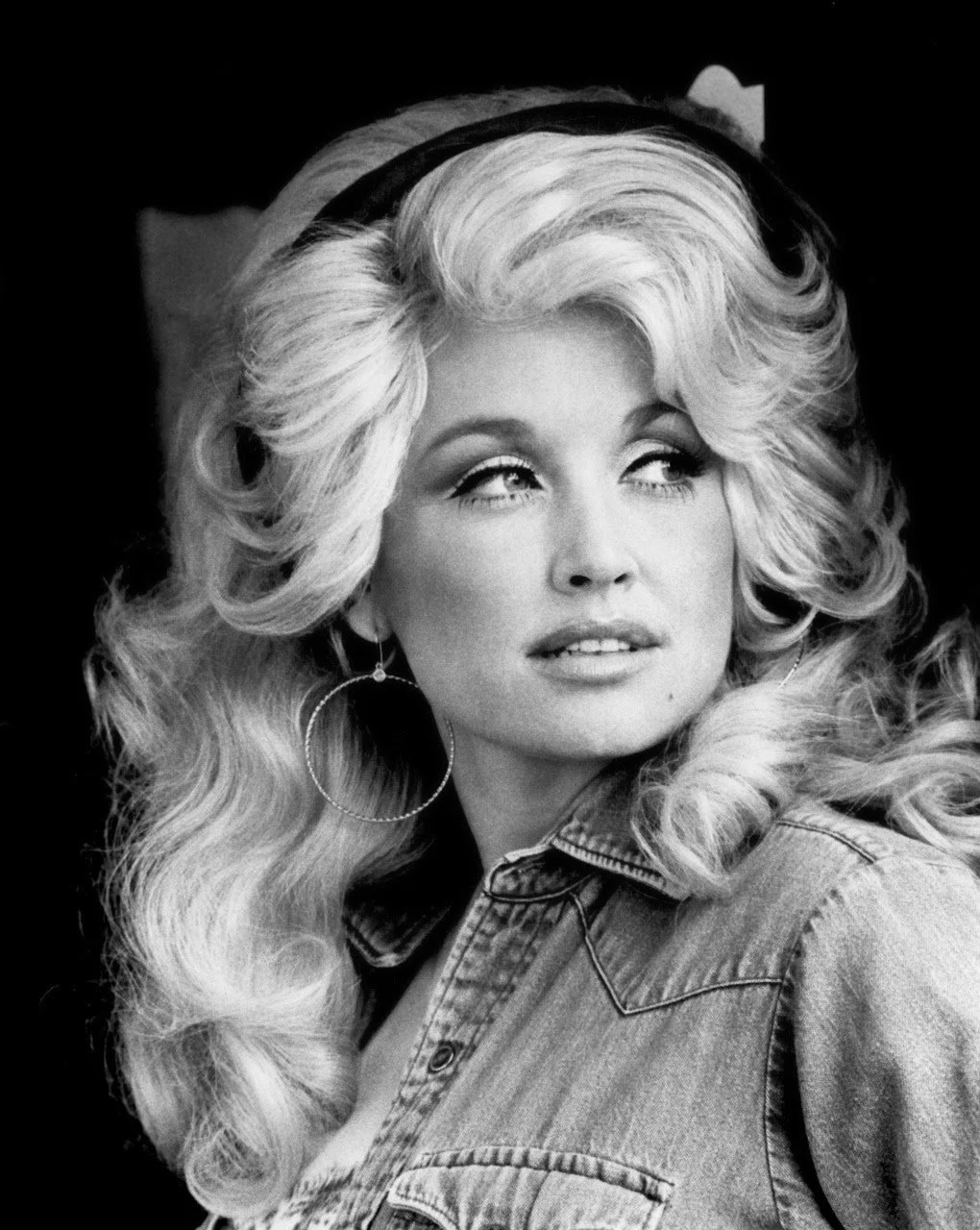
Dolly Parton 1970
There are some famous people whose deaths feel strangely difficult to comprehend, not because we knew them, but because they have been present for so long that they seem to belong to the permanent furniture of popular culture. Dolly Parton was one of them. For more than sixty years there was that unmistakable Tennessee voice, the platinum hair, the rhinestones and high heels, the wonderfully quick sense of humour and, behind all the spectacle, an exceptionally gifted songwriter. She was so recognisable that she had long since passed the point of needing an introduction. She was simply Dolly.
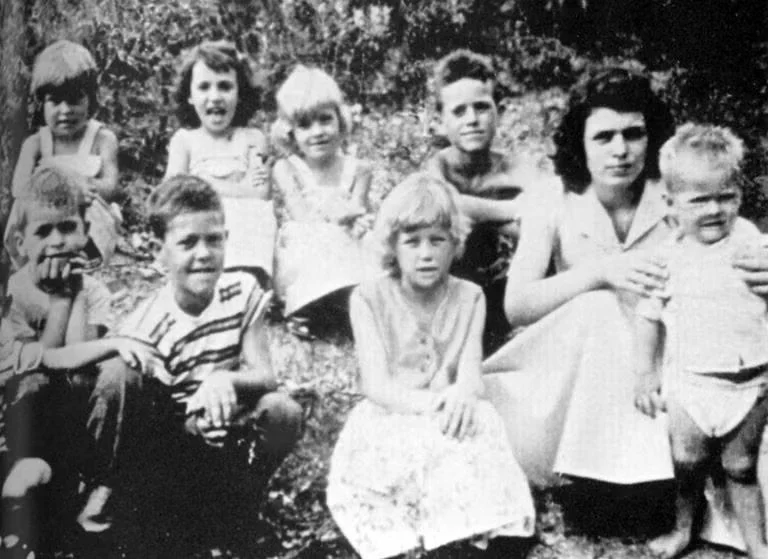
Born Dolly Rebecca Parton in Sevier County, Tennessee, in 1946, she was the fourth of twelve children and grew up in a small cabin in the foothills of the Great Smoky Mountains. Her childhood was poor in the literal sense, but the way she later spoke about it was rarely miserable. There was music, church, family, storytelling and the landscape around them, all of which would eventually find their way into her songs. Even after she became enormously wealthy and internationally famous, Tennessee remained central to her identity. She never seemed embarrassed by where she had come from, nor particularly interested in polishing away the accent or eccentricities that might once have marked her as an outsider.
Stella Parton / Splash News
The Parton siblings as children.
She began performing as a child and moved to Nashville the day after graduating from high school, determined to become a songwriter. The career that followed is almost too large to summarise neatly. There were thousands of songs, decades of recordings, films, television appearances, businesses and awards, but statistics have never been a particularly satisfying way of explaining Dolly Parton. Her talent was much more intimate than the scale of her success suggests. At her best, she could take an emotion that might have become mawkish in somebody else's hands and make it feel remarkably simple and true.
Jolene, written from the vulnerable position of a woman pleading with another not to take the person she loves, could easily have been cruel or accusatory. Instead it is almost painfully tender. Coat of Many Colors turned a childhood memory of poverty into a song about dignity, family and the complicated difference between what something costs and what it is worth. 9 to 5 made the frustrations of working life enormously entertaining without losing the anger underneath them. Then there was I Will Always Love You, written as a farewell to Porter Wagoner when Parton decided to leave his television programme and pursue her own career. It is a love song about leaving rather than staying, which may be why it has endured.
The story of that song also reveals another side of her character. When Elvis Presley wanted to record it, his manager, Colonel Tom Parker, expected Parton to surrender a substantial portion of the publishing rights. She refused. It was an extraordinary decision for a young songwriter to make when Elvis Presley was interested in her work, and she later admitted that she had been heartbroken to lose the recording. She nevertheless kept ownership of the song. When Whitney Houston's version became a worldwide phenomenon nearly two decades later, that decision proved extraordinarily valuable. Parton had the warmth and manners of someone who could easily be underestimated, but she understood the business she was in.
The same intelligence was evident in the creation of her public image. Dolly never pretended that the blonde hair, tiny waists, heels, nails and rhinestones were natural. Quite the opposite: she delighted in their artificiality. She often told the story of being fascinated as a child by a glamorous woman in her hometown whom the adults regarded as the local tramp. The grown-ups saw somebody cheap; Dolly thought she was beautiful. When she was told that this was what trash looked like, her response, as she later remembered it, was essentially that this was what she wanted to be.
It is difficult not to admire the stubbornness of that choice. As her career grew, she could easily have allowed the music industry to make her more tasteful, more restrained or more conventionally sophisticated. Instead, she became more Dolly. The hair grew higher, the clothes became brighter and the rhinestones multiplied. What could have become a costume somehow became completely inseparable from the person wearing it.
There was also an appealing lack of vanity about the whole thing. Parton spoke openly and very funnily about cosmetic surgery, wigs and the amount of work involved in looking like Dolly Parton. She once remarked that it took a lot of money to look this cheap, one of those perfect Dolly lines that managed to make the joke before anybody else could. It is tempting to describe her image as an early exercise in personal branding, but that makes it sound far more calculated and corporate than it ever appeared. She simply knew what she liked and had no desire to become embarrassed about it.
That confidence made her a particularly unusual kind of female star. She could be overtly feminine without appearing fragile, sexually glamorous without allowing herself to be reduced to it, and very funny without making herself small for the sake of the joke. Men frequently underestimated her, and she often seemed perfectly happy to let them do so. Beneath the sweetness was a woman who retained ownership of her songs, built businesses and maintained an extraordinary degree of control over a career that lasted longer than those of most of her contemporaries.
Her success eventually reached far beyond music. There were films including 9 to 5, The Best Little Whorehouse in Texasand Steel Magnolias, and in 1986 she became involved in the theme park that would become Dollywood. It would have been easy to build something bearing her name in Nashville, Los Angeles or any other centre of the entertainment industry. Instead it was established in the Smoky Mountains, close to where she had grown up, bringing tourism and employment to the area that had shaped her.
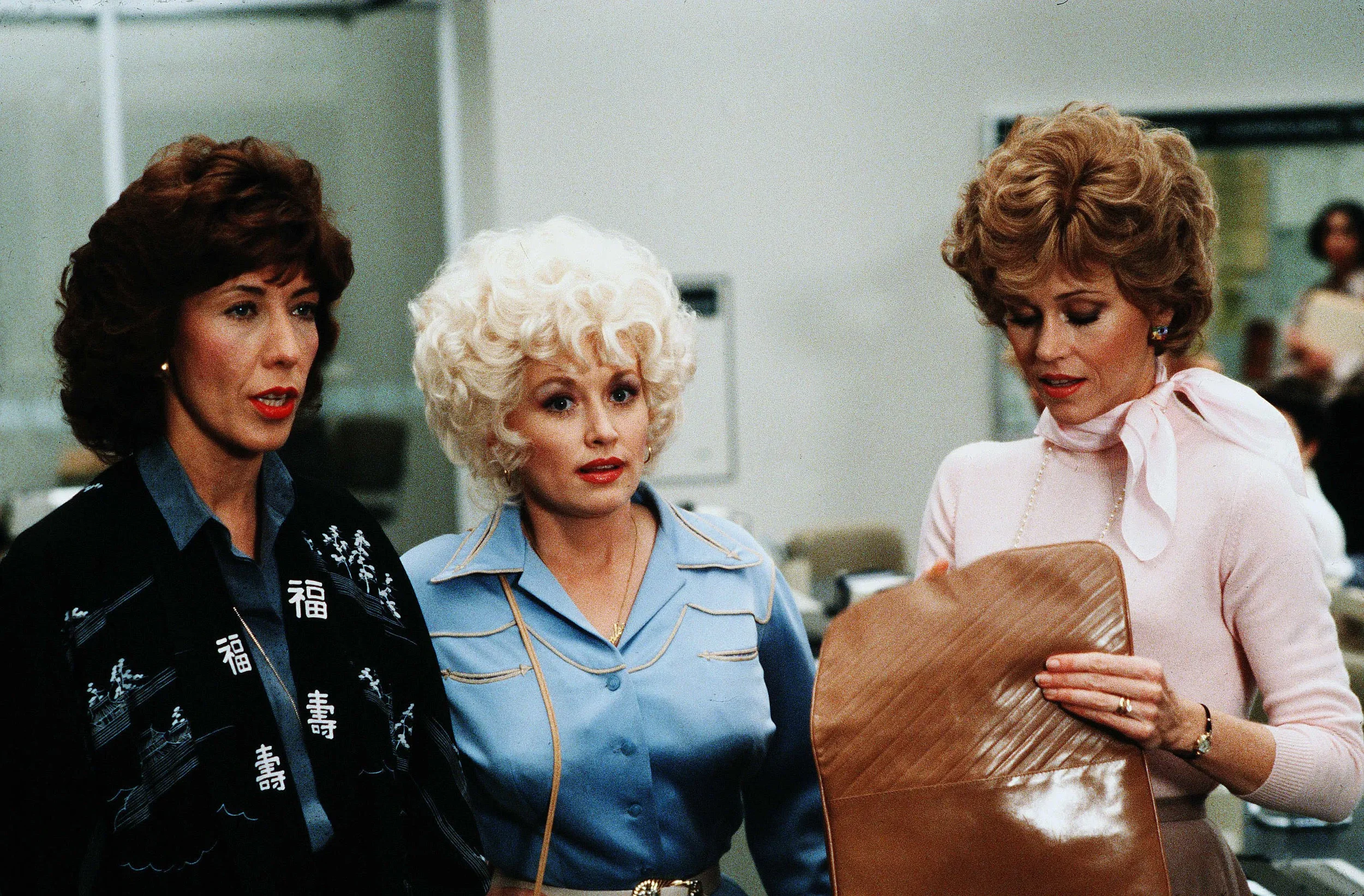
Tomlin, Parton and Fonda in 9-5
Her attachment to home was matched by a genuine interest in improving the lives of people there. In 1995 she founded the Imagination Library in honour of her father, who had never learned to read or write. The idea was beautifully straightforward: children would receive books through the post from birth until they began school, regardless of their family's income. What began in her home county expanded across the United States and eventually into other countries, including the United Kingdom. Hundreds of millions of books have since been sent to children.
It is perhaps this part of her life that explains why the affection for Dolly Parton extended so far beyond people who listened to country music. Plenty of celebrities give money away, and plenty establish foundations, but with Dolly it seemed connected to the same place from which the songs had come. The little girl who grew up in a crowded cabin in Tennessee became enormously successful and then spent decades sending books to other little children. There is something pleasingly complete about that circle.
For all her openness, she was also considerably more private than her public personality suggested. Her marriage to Carl Dean lasted nearly sixty years, yet he remained almost entirely outside the machinery of celebrity. She spoke about him, told stories about him and occasionally joked about his preference for avoiding public events, but their life together largely remained theirs. In a culture that increasingly treats access as a measure of authenticity, Dolly seemed to understand that being loved by the public did not mean the public was entitled to everything.
That distinction may be part of the reason she remained so widely liked. She gave people plenty without appearing to perform intimacy with them. Her interviews were warm and funny, her stories were often repeated and embellished over the years, and the Dolly we saw was undoubtedly a carefully maintained public version of herself. Yet it never seemed deceptive. If anything, the artifice of her appearance made the sincerity underneath it more obvious. She never asked us to believe the hair was real.
She also belonged to an increasingly rare group of entertainers capable of being appreciated by people who agreed on very little else. Dolly Parton could move between country traditionalists, Hollywood, churchgoing America, younger pop audiences and the LGBTQ+ community without appearing to alter herself substantially for any of them. She was careful about politics and generally reluctant to be drawn into partisan battles, preferring to speak about kindness and treating people decently. That position sometimes frustrated those who wanted her to say more, but it was consistent with the way she had always conducted herself.
There will inevitably be attempts to explain Dolly Parton's legacy through record sales, awards and chart positions, and by any of those measures the career is remarkable. But her real achievement may be less easily counted. She managed to remain recognisably herself through six decades in an industry built around reinvention. Fashion changed, country music changed and America changed around her, while Dolly's silhouette remained almost comically consistent.
Perhaps more importantly, success never appeared to make her cynical. She retained a sense of gratitude for the life she had been able to build without pretending that it had happened by accident. She was ambitious, shrewd and extremely hardworking, and never seemed to think those qualities were incompatible with generosity. Nor did she believe intelligence required seriousness, or that growing older required becoming more restrained.
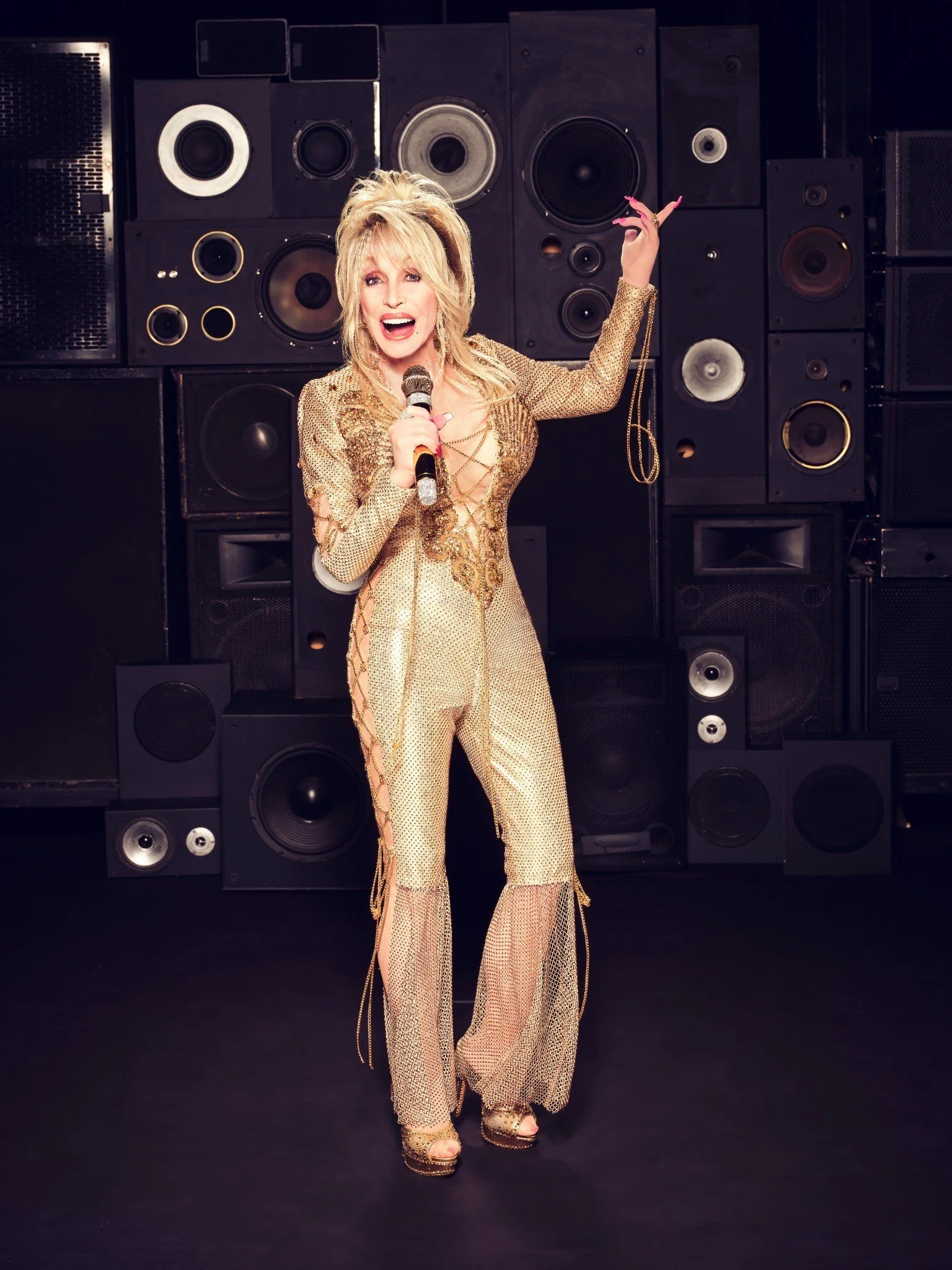
It is difficult to imagine anyone replacing her because there is no obvious vacancy to fill. There will be other great country singers and songwriters, other actresses who cross successfully into music and other celebrities who turn their fame towards philanthropy. Dolly Parton occupied a category largely of her own making.
What remains are the songs, of course, and they will probably outlast most of the things written about her now. There will also be children receiving books because of an idea she had more than thirty years ago, families whose livelihoods are connected to the place she built in Tennessee, and generations of performers who learnt something from the way she conducted her career. But there is also the memory of a woman who understood the value of being entirely, unapologetically herself. Dolly Parton made an art of excess without ever losing sight of what mattered, and beneath all the hair, jokes and rhinestones was a remarkably simple philosophy: work hard, know your worth, give something back and don't let anybody else decide who you ought to be.
For a woman who spent a lifetime making sure she could never be mistaken for anybody else, there is really only one way to describe what has been lost.
There was only ever one Dolly.