DECIDE SOMETHING
September has always had the atmosphere of a beginning. But beginnings are of very little use unless we are prepared to choose one.
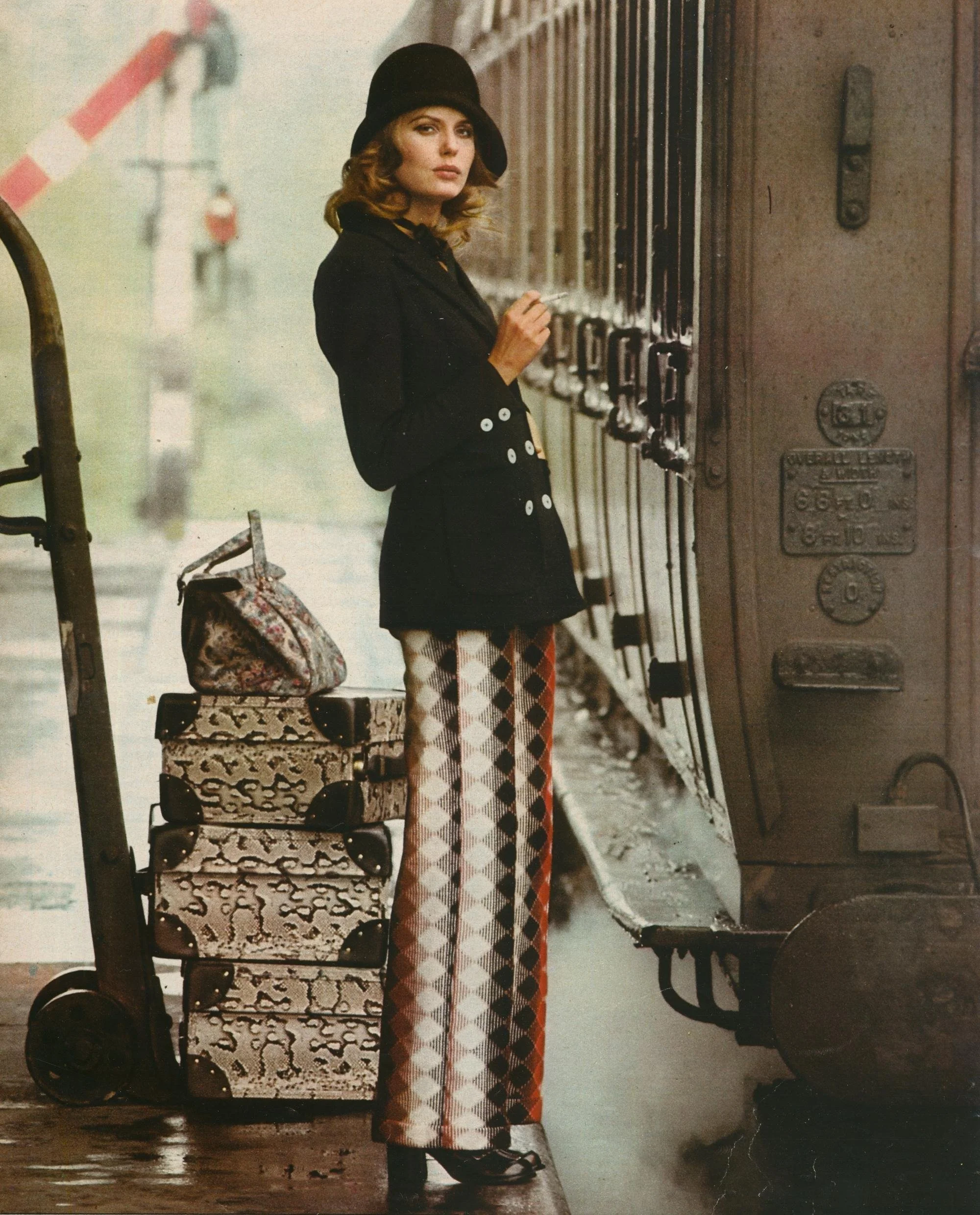
Michael Berkofsky.
September does something peculiar to people. The first cool morning arrives and suddenly we want a new notebook, a better coat, a cleaner kitchen and, quite possibly, an entirely different life. We clear cupboards, make lists and decide that this is the month we will read more, drink less, save properly, finally make the thing we have been talking about making and perhaps become the sort of person who remembers to water the basil before it dies.
There is actually something behind this impulse. Researchers have described a “fresh-start effect”, in which temporal landmarks such as birthdays, a new year or the beginning of a new season can create a psychological dividing line between our present selves and the person we were before. September has a particularly convincing version of it. Long after we have stopped buying pencil cases, some part of us still seems to believe that the year begins when summer ends.
The interesting question is what happens when the new notebook stops being new. Wanting change is relatively easy; we can do it from the sofa. The mechanics of changing something are considerably less appealing because meaningful change usually asks us to disturb an arrangement that, however imperfect, has become comfortable.
We like imagining the new job, the new city, the healthier body, the better relationship, the book finally written or the business finally started. What we are less enthusiastic about is resigning, leaving, risking, failing, spending money, losing money, disappointing somebody or admitting that something we have invested years in may no longer be right for us. Change sounds exhilarating when discussed in the abstract. Up close, it has paperwork.
This is why there is a substantial difference between wanting something and deciding something. Wanting can remain in the background for years without interfering with the life you already have. You can want to write a book while never opening the document, want to move while renewing the lease, or want different work while accepting another promotion in the job you complain about every Sunday evening. A decision is different because eventually it has to alter what you do on an ordinary Tuesday.
We often imagine that changing our lives begins with confidence or motivation, perhaps accompanied by the cinematic sensation that we are finally moving towards our destiny. More often it begins privately, with the considerably less glamorous realisation that we are no longer prepared to continue exactly as we are. Nothing outside us necessarily changes in that moment, but our relationship to it does.
The trouble is that if we do not make these decisions, life is quite capable of making them for us.
There is a natural momentum to any life. Where we live affects the opportunities we encounter. Our families have expectations. Our partners have needs. Our employers have plans for our time. Our friends establish what begins to feel normal. Money expands or restricts what is possible, while habit quietly makes yesterday the template for tomorrow. Add an algorithm spending several hours a day showing us what everybody else apparently wants and it is surprisingly easy to build a life without ever quite deciding to build it.
Stay in the same job for long enough and it becomes increasingly difficult to imagine yourself doing something else. Remain in the same unhappy relationship and its peculiar rules begin to feel inevitable. Spend enough time among people who regard ambition as embarrassing and you may start apologising for your own. Live somewhere you never particularly chose for ten years and eventually it becomes the answer to the question of where you live.
None of this requires anybody to deliberately control us. It is simply the enormous power of the default.
We tend to think of indecision as neutral because nothing dramatic has happened. In reality, indecision permits whatever already exists to continue accumulating weight. The temporary arrangement becomes permanent, the compromise becomes normal and the thing we were going to do “one day” quietly becomes something we used to want.
Sometimes staying is absolutely the right decision. There is nothing inherently courageous about leaving and nothing inherently weak about remaining where you are. What matters is whether you stayed because you chose the life in front of you or because you never quite got around to choosing anything else.
That distinction is enormous, because a surprising amount of unhappiness comes not from having made the wrong choice but from feeling that we never made one at all.
Modern self-improvement culture can be particularly irritating here because it tends to treat circumstances as a minor administrative inconvenience. Apparently all that stands between us and complete transformation is waking at five, taking a cold shower and wanting it badly enough. This is obviously nonsense. People have children, mortgages, illness, elderly parents, debt, responsibilities and partners. Some people can resign from a job on Friday and describe six months without an income as “taking some time out”. Others cannot afford to miss one payslip.
Circumstances are real, and they are not distributed fairly. But there is a difference between acknowledging the limits of our circumstances and allowing those circumstances to make every decision for us. You may not be able to leave today, but you can decide that you are going to leave, even if the distance between that decision and the eventual departure is a year.
Once that decision has genuinely been made, something subtle begins to happen. You save differently because the money now has a purpose. You start looking at opportunities you previously ignored. You make calls, update things, learn something, stop spending as though the present arrangement is permanent and begin constructing alternatives. From the outside, very little may appear to have changed, but the direction has.
This is why so many transformations appear sudden when viewed from a distance. Somebody leaves a career, moves across the country, ends a relationship, starts a company or makes a piece of work that seems to arrive from nowhere. To everyone else, the change happened on the day they resigned, moved, left or launched. For the person living it, the real beginning may have occurred two years earlier, when they privately decided the old arrangement was no longer acceptable.
There is something worth examining in that word: acceptable. We spend a great deal of time thinking about what we want and surprisingly little thinking about what we are prepared to tolerate. Yet our lives are often shaped more accurately by the second category.
We may say we want interesting work while accepting work that deadens us. We may say we want respect while repeatedly making room for people who offer very little of it. We may insist that creativity matters to us while giving it whatever scraps of time remain after everything else has been fed. We may want financial security but continue making decisions that make it impossible.
Eventually, the diary is a more reliable witness than the vision board.
This is not an argument for relentless productivity or turning every hour into some exercise in optimisation. Quite the opposite. Rest, pleasure, wandering around, long lunches and doing things with absolutely no measurable outcome are part of a good life. The question is whether the shape of your life reflects what you actually value or simply whatever has been allowed to occupy it.
Sometimes the more useful question is therefore not “What do I want?” but “What am I continuing simply because I haven't made a decision about it?” There is often something rather interesting waiting behind the answer. It might be a job, a relationship, a habit, a project, a place or an idea about yourself that expired years ago but was never formally cancelled.
We are remarkably good at keeping old identities on life support. We say that we are not disciplined, not creative, terrible with money, too old to begin again, not the sort of person who runs a business, travels alone, writes a book, gets divorced, changes careers or wears the ridiculous shoes. Often these statements are based on evidence gathered from a version of ourselves who existed years ago.
Perhaps at twenty-two you did give up easily. Perhaps you were terrible with money at twenty-eight. Perhaps somebody told you at school that you weren't creative and, rather incredibly, they have been allowed to retain the position of chief executive of your self-image ever since.
At some point, we are allowed to review the appointment.
The uncomfortable part is that once we recognise something needs to change, we still have to act. This is where clarity is often mistaken for certainty. We assume the correct decision should feel obvious and peaceful, when many important decisions feel dreadful precisely because they create uncertainty.
Leaving a job means surrendering the security of knowing what happens on Monday morning. Ending a relationship means exchanging familiar unhappiness for an unknown future. Starting something means risking the possibility that nobody will care. Asking for more creates the possibility of hearing no. Changing how we allow somebody to treat us may reveal that the relationship only worked when we accepted less.
Discomfort is therefore not always evidence that we are moving in the wrong direction. Sometimes it is simply what happens when we disturb an arrangement that has become deeply settled.
There are, of course, bad decisions. We will make them. The attempt to avoid this entirely can become its own peculiar form of paralysis. We gather information, ask more people, read another article and imagine another possible outcome because somewhere beneath all the analysis is the hope that enough thinking will eventually remove risk.
It won't.
At some point, reality has to be consulted.
You apply for the job and discover whether anyone responds. You move and discover whether you like the place. You make the work and discover whether anybody connects with it. You have the conversation and discover what the relationship can withstand. Action gives us information that thinking cannot.
A wrong decision can therefore be surprisingly useful. It tells you something. You took the job and hated it, moved and missed home, launched the business and discovered the idea wasn't right. None of these outcomes is particularly enjoyable, but each contains information that did not exist beforehand. Indecision can preserve the fantasy of every possible future while preventing us from experiencing any of them.
This is also why waiting for confidence is such a poor bargain. Confidence is usually retrospective. We do something frightening, survive it and quietly add the experience to the evidence we have about ourselves. The next frightening thing becomes marginally less frightening because we now know we have survived one before.
We tend to want this process in reverse. We would like confidence delivered in advance, preferably before we have done anything that might require it. Unfortunately, life appears to have misplaced that particular service.
Perhaps the hardest part of changing something is not the beginning at all, but the middle. There is an old life and there is the new life we imagine, but between them sits an awkward stretch in which neither quite exists. You have left the job but the new business isn't earning enough. You have moved but haven't made friends. You have ended the relationship but haven't built a new life. You have started making something and nobody is particularly interested yet.
This is the point at which familiarity becomes seductive. The old life begins to look rather lovely once we have forgotten why we wanted to leave it. Difficulty can begin masquerading as evidence that we made a mistake, when sometimes difficulty is simply the cost of constructing something that does not yet have foundations.
This is where persistence matters, although not the cartoonish version that tells us to keep going forever regardless of evidence. Changing direction is allowed. Abandoning a bad idea is allowed. Admitting that you were wrong is allowed. The important thing is not to mistake every uncomfortable period for a command to retreat.
There is another influence worth considering, and it is perhaps the least glamorous of all: environment. We give willpower enormous credit when our surroundings may be doing far more work. If everybody around you hates their job and regards this as an unavoidable condition of adulthood, eventually hating your own becomes ordinary. If everybody you know spends everything they earn, saving begins to look eccentric. If the people around you mock ambition, ambition starts to feel embarrassing.
This doesn't mean ruthlessly removing anybody who hasn't recently founded a technology company from your Christmas card list. It simply means noticing what the rooms you spend time in are teaching you to consider normal.
The same applies to advice. There comes a point at which asking everybody what they think is simply another way of delaying the moment when you have to decide. Advice is useful when somebody possesses information or experience that you don't. It becomes less useful when you are secretly hoping that another person will assume responsibility for the consequences.
They cannot. They don't have to wake up in your life the morning after the decision. You do.
Perhaps this is why the September urge to begin again is worth paying attention to, even if we resist turning it into another seasonal exercise in self-improvement. There are still four months of the year left, which is both less time than we imagined in January and considerably more time than we sometimes pretend.
You do not need to reinvent yourself before Christmas. You don't need a new morning routine, a complicated system or a colour-coded plan for the person you intend to become. You might simply decide that one thing will not be carried unchanged into another year.
It could be something enormous. More likely, it won't be. It might be making the call, sending the application, starting the savings account, writing the first page or finally having the conversation you have rehearsed fifty times while driving.
The visible result may take months or years. That is not the point. The direction has changed.
We tend to celebrate transformation once it becomes photogenic. We like the new career, the new house, the finished book, the successful business and the person standing triumphantly on the other side of whatever happened. The more important moment is usually much quieter and happens long before there is anything to show for it.
It is the moment somebody stops waiting for their circumstances to volunteer a better arrangement and decides to participate in what happens next.
September will become October whether we make a decision or not. Another year will eventually arrive, followed rather rudely by another one. Life has no particular objection to carrying us forward exactly as we are.
The question is whether that is where we actually want to go.
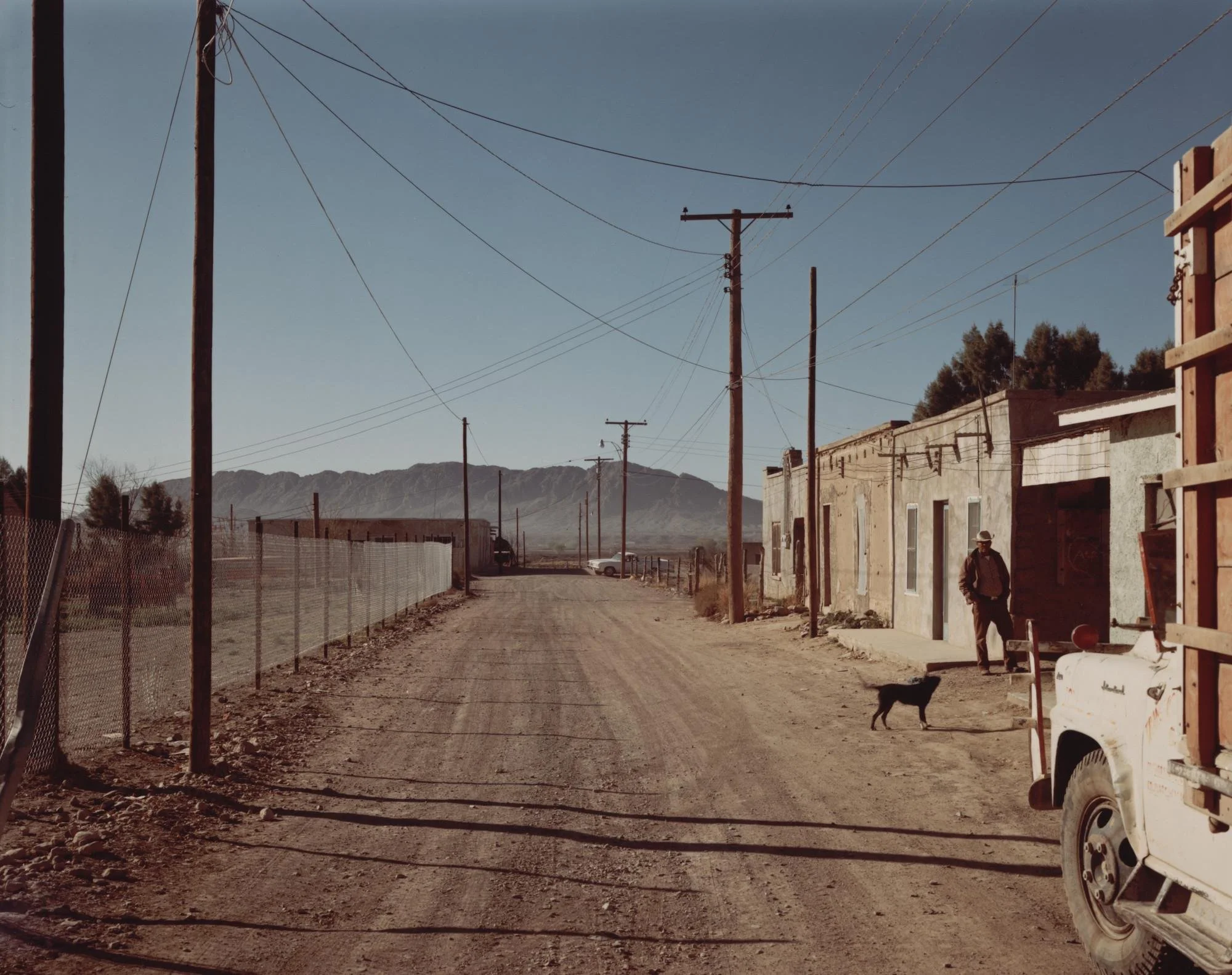
Stephen Shore Presidio, Texas, February 21, 1975