The Art Of Dressing Well
THE LONG GAME
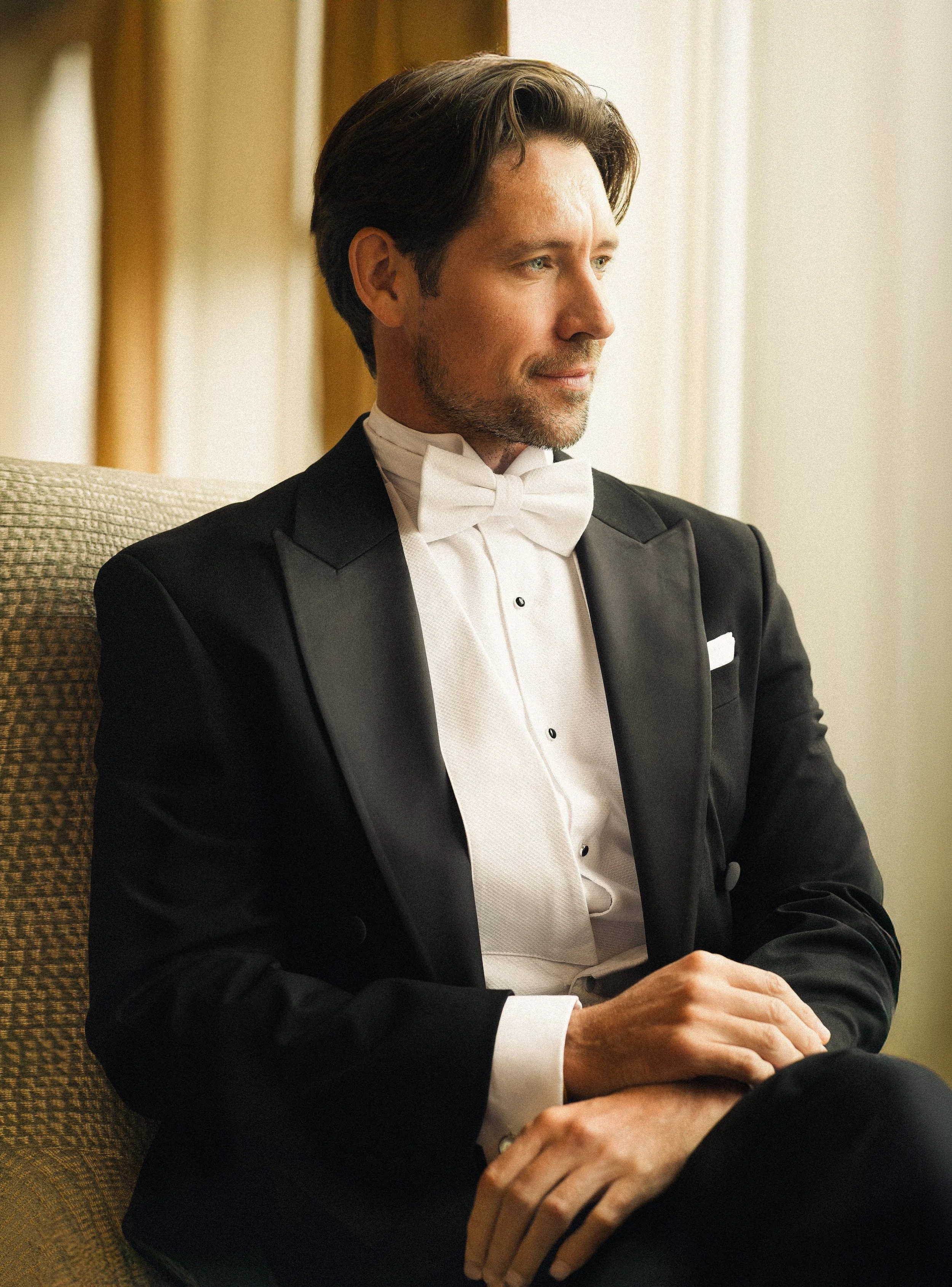
Model, Tom Coulston
Good clothes were never supposed to last a season. In praise of tailoring, beautiful cloth and the quiet pleasure of dressing for yourself.
There was a time when a man's clothes told you something about him. Not how closely he followed fashion, but how he saw himself. A jacket was chosen for its cloth and its cut. Shoes were polished, repaired and worn again. A good overcoat might remain in a wardrobe for twenty years and, somewhere along the way, become better than when it was bought.
We have spent the intervening decades making clothes faster, cheaper and more plentiful. Yet perhaps the great irony of modern menswear is that, surrounded by more choice than any generation before us, it has become increasingly difficult to know what to wear.
The answer may be to stop looking forward.
There is a particular confidence in the man who has found his uniform. Think of Alain Delon in a dark suit and narrow tie; Robert Redford in worn denim and tweed; Michael Caine in tailoring that looked as though it belonged to him rather than to the decade. None needed particularly complicated clothes. What made them memorable was consistency, proportion and an understanding that style begins when the clothes stop demanding attention.
The best-dressed man in the room is rarely the one wearing the newest thing.
A well-cut suit remains perhaps the greatest example. Fashion has spent years alternately shrinking it, enlarging it, shortening its trousers and widening its lapels, but the principles of good tailoring have changed remarkably little. The shoulder should sit where a shoulder actually is. The jacket should give shape without imprisoning the body. Trousers should fall rather than cling. And cloth should have enough weight to move.
This is where fabric matters.
Wool, linen, cotton, cashmere, silk: natural fibres possess an imperfection that synthetic clothes struggle to imitate. Linen creases. Wool softens. Leather marks. Denim fades. These things are not defects but evidence of a life being lived in them.
Perhaps that is also why vintage has become such an important part of the modern man's wardrobe. Not vintage as costume — nobody needs to emerge looking as though they have wandered off the set of Brideshead Revisited — but the incorporation of older clothes into an otherwise contemporary wardrobe.
A 1980s Armani jacket worn with a white T-shirt. An old Burberry trench over jeans. A beautifully made pair of trousers discovered in a second-hand shop and altered by a tailor. Your father's watch. A silk scarf bought in Paris. A battered leather jacket whose provenance nobody quite knows.
These pieces give a wardrobe what cannot be purchased in a single afternoon: character.
And then there is the tailor.
For all the mythology surrounding bespoke clothing, one of the great secrets of dressing well is that almost anything can look more expensive when it fits properly. A modest vintage suit altered beautifully can have infinitely more presence than an expensive designer suit in the wrong size. Shorten the sleeve. Take in the waist. Let out the trouser. Change the buttons. Clothes are not finished simply because they have left the shop.
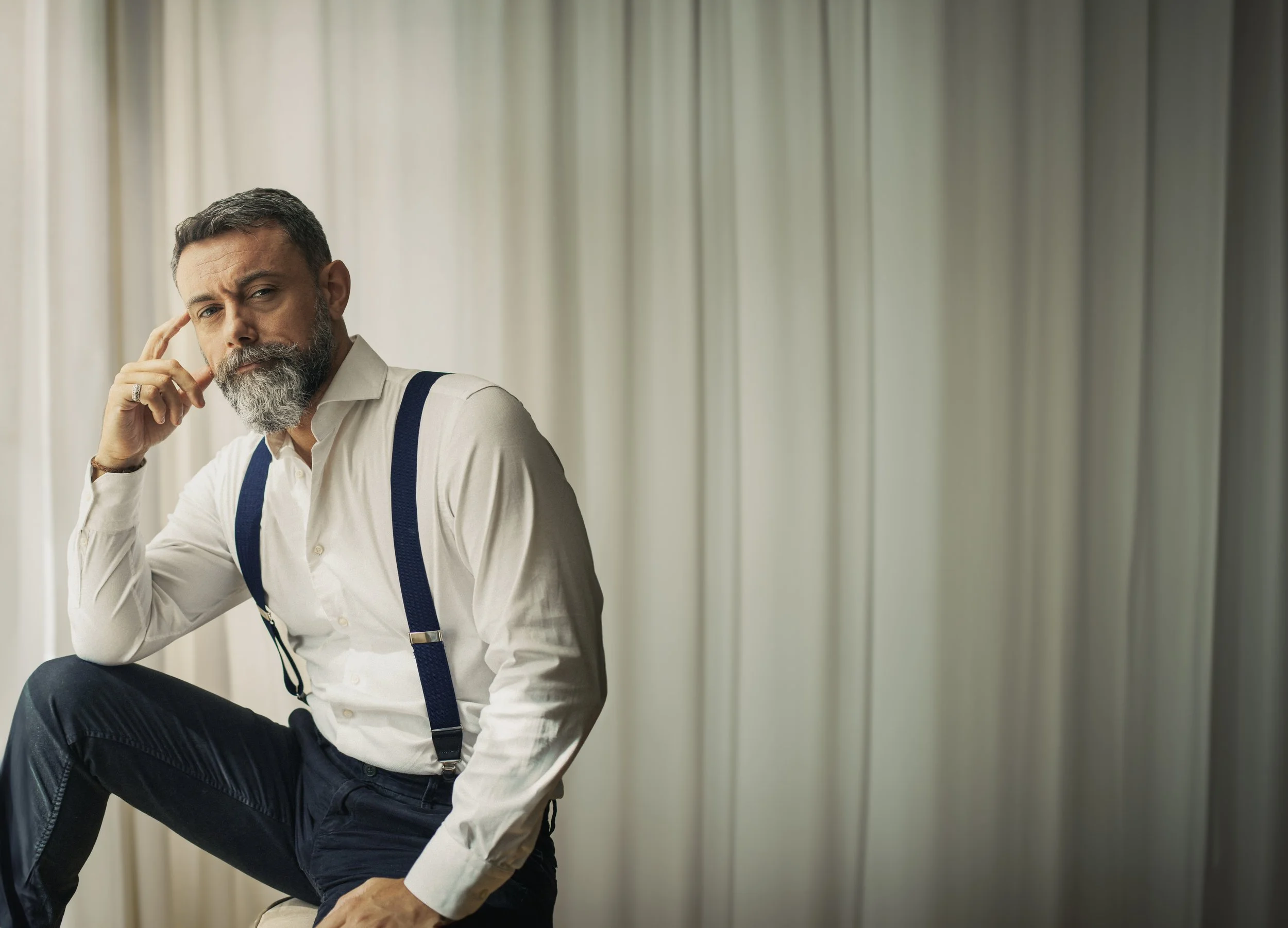
Model, Amir Tabrizi
Buy less. Alter more. Keep things longer.
It sounds almost embarrassingly simple, but perhaps simplicity is the point.
The aim isn't to construct the perfect wardrobe overnight. The most interesting wardrobes are accumulated. They contain mistakes and discoveries, things inherited and things hunted down, pieces bought at twenty-five that somehow still work at forty-five.
Style develops slowly because people do.
There will always be another trend, another shoe, another silhouette declared essential. Let it pass. Find the jacket whose shoulders make you stand differently. Learn which trouser shape suits you. Discover whether you prefer flannel to worsted wool, loafers to Derbies, navy to black. Buy the best version you can reasonably afford and then wear it far more often than seems sensible.
Because classic style isn't really about dressing like men from another era.
It is about taking from them an idea we have somehow forgotten: that clothes should belong to you for long enough to become yours.
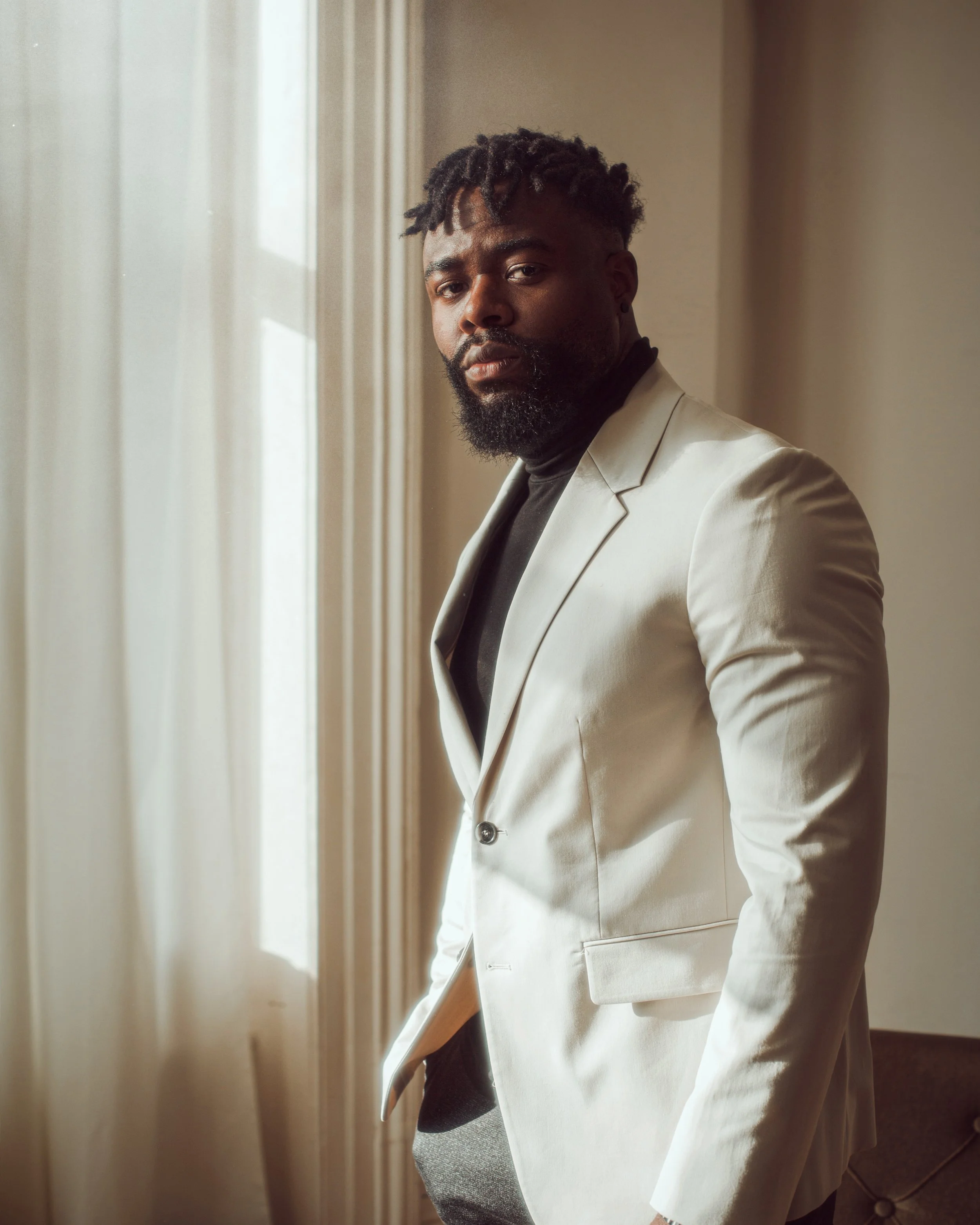
Model, Robbie Bannerman