THE GOOD COAT
Buy one properly and, for six months of the year, nobody need know what you are wearing underneath.
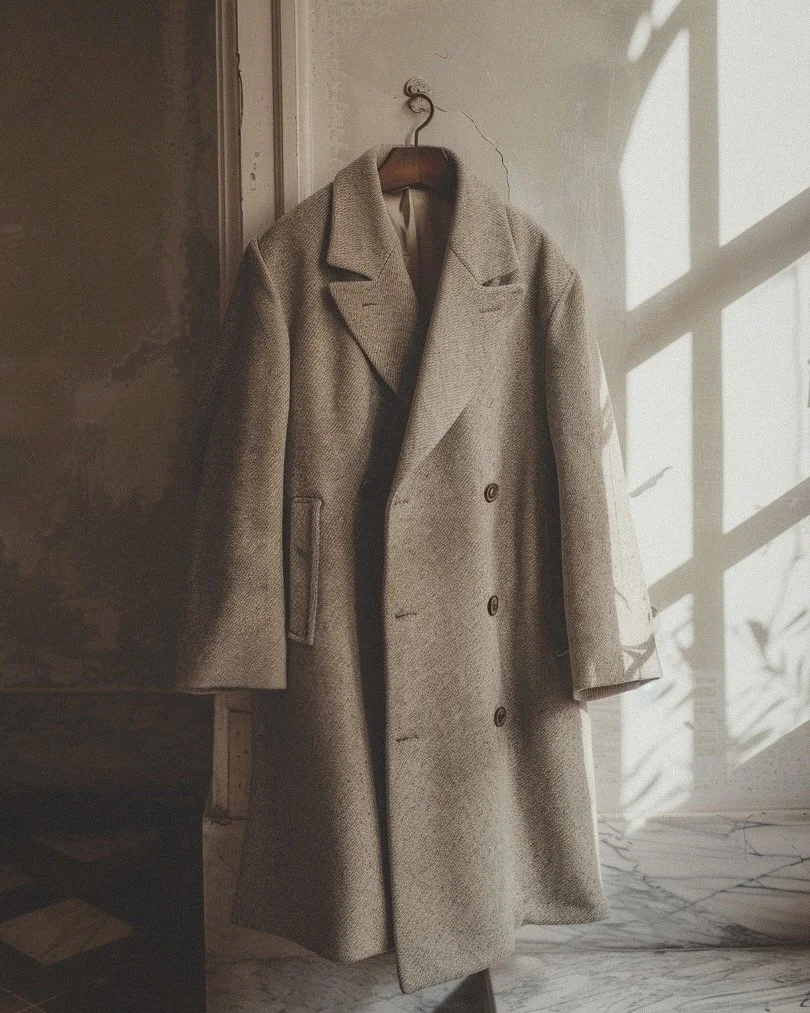
There comes a point every autumn when getting dressed becomes considerably easier. The temperature drops, the coat comes out, and suddenly the questionable jumper, old T-shirt and trousers you put on in the dark are nobody else's concern. This is the great democratic service performed by a good coat. It can make almost anyone look as though they have made an effort. There are garments that require youth, a particular figure or the confidence to explain yourself at dinner. A coat is not one of them. A beautifully cut overcoat improves with age, works on almost everybody and has the additional advantage of being removed before anyone can inspect the rest of the outfit too closely. For this reason, it is worth buying a good one. Not six fairly good ones. One very good one.
THE WEIGHT OF THE THING
The first clue is usually weight. Pick up a proper vintage overcoat and you may briefly wonder whether somebody has left a small dog in the pocket. Older coats were frequently made from substantial wool cloth designed for the rather old-fashioned purpose of keeping the wearer warm. This sounds obvious, but fashion has spent several decades discovering ingenious ways of making winter coats that require another coat underneath them. Look for wool, cashmere, camel hair and good blends with a high natural-fibre content. Feel the cloth. It should have substance. Look inside too: a proper lining, well-finished seams and buttons sewn on as though the manufacturer genuinely hopes they will remain there are encouraging signs. Cashmere is wonderful, but don't become hypnotised by the word on a label. A beautiful heavy wool can be far more useful than an indifferent piece of cashmere purchased principally so somebody could print cashmere on the swing tag.
FIT IS ALMOST EVERYTHING
A coat should make your shoulders look better than they really are. That is part of the bargain. The great overcoats, Crombies, Chesterfields, polo coats, raglans, guards coats work because they create a silhouette. There is structure through the shoulder or a deliberate softness to it, enough room to wear tailoring or knitwear beneath, and sufficient length to give the whole thing authority. Length matters particularly. At some point we became frightened of coats approaching the knee and began chopping them off somewhere around the thigh. This is convenient for getting into a hatchback but less successful if your ambition is to look like Marcello Mastroianni arriving unexpectedly in Paris. Go longer. A tailor can shorten sleeves, take in a waist, move buttons and make surprisingly significant alterations. This is especially useful when buying vintage, where finding the perfect coat in precisely your measurements would require divine intervention.
Buy for the shoulders first. Negotiate the rest later.
GO WHERE THE OLD MEN'S COATS ARE
One of the great pleasures of buying a coat is that some of the best examples are already sitting in second-hand shops. Search vintage stores, charity shops, eBay, Vinted and specialist menswear dealers. Look beyond the obvious luxury labels. Old British and Italian manufacturers produced superb outerwear, and anonymous coats can be beautifully made. The label is evidence, not a verdict. Turn the coat inside out. Check the lining, seams, pockets and cuffs. Look carefully for moth damage, particularly around collars and folds. A damaged lining can be replaced; a missing button is hardly a tragedy. A colony of moths with long-established residency rights is a different proposition. And don't dismiss the women's or men's department according to which one convention says you belong in. A great oversized men's cashmere coat can look extraordinary on a woman, while many vintage pieces were cut in ways that bear little resemblance to today's sizing anyway.
Try it on.
COLOUR NEEDN'T BE COMPLICATED
Camel has survived because it makes everybody look approximately 20 per cent richer. Navy is difficult to get wrong. Charcoal is excellent. Black is severe in the right way. Chocolate brown deserves considerably more attention than it receives, and herringbone gives you pattern without requiring you to become a person who “wears pattern”. Then there are coats in bottle green, tobacco, burgundy and beautiful checks, which should be considered when the coat itself is going to do most of the talking. What I would avoid is buying an expensive coat in the colour everybody has suddenly decided is essential this November. If you cannot imagine liking it when Instagram has moved on, allow somebody else to enjoy it. A good coat should outlive several embarrassing trends.
THE POCKETS ARE IMPORTANT
This is rarely discussed in fashion criticism, but a coat without useful pockets is an act of hostility. A proper coat should accommodate hands, gloves, keys and ideally the miscellaneous debris accumulated during a day outside. Inner pockets are even better. There is something pleasingly adult about putting a wallet into the inside breast pocket of an overcoat. The best coats also develop a life in their pockets. An old theatre ticket. A receipt from Rome. A glove whose partner disappeared three winters ago. Forty-seven pence. This is how clothes become yours.
WEAR IT TO DEATH
The most elegant coat is rarely the newest one. Wool can be brushed. Buttons can be replaced. Linings can be repaired. Small holes can be invisibly mended by somebody who knows what they are doing. A good coat will acquire softness around the pockets and cuffs and gradually conform to the person wearing it. Let it. The purpose of buying quality is not to spend the following decade terrified of using it. Wear the good coat to dinner. Wear it on the train. Wear it in the rain when appropriate. Throw a scarf over it. Put your hands in the pockets. And when the lining finally gives up, replace it rather than the coat. There is something wonderfully unfashionable about owning a garment for long enough that people begin to associate it with you. Think of Columbo's raincoat, Churchill's overcoat or any number of artists and writers whose coats eventually seemed less like wardrobe and more like anatomy. Perhaps that is the real test. The best clothes don't continually announce themselves as new. Eventually they simply look like yours. So this autumn, ignore the suggestion that you require an entirely new wardrobe. Find one magnificent coat instead. Make it wool, make it long, have the sleeves altered and wear it until spring.
Nobody needs to know you've got a terrible jumper underneath.