POSTCARD FROM ROME
Faded palazzos, cold aperitivo and the last of the evening sun on ancient stone. A few days in the Eternal City.
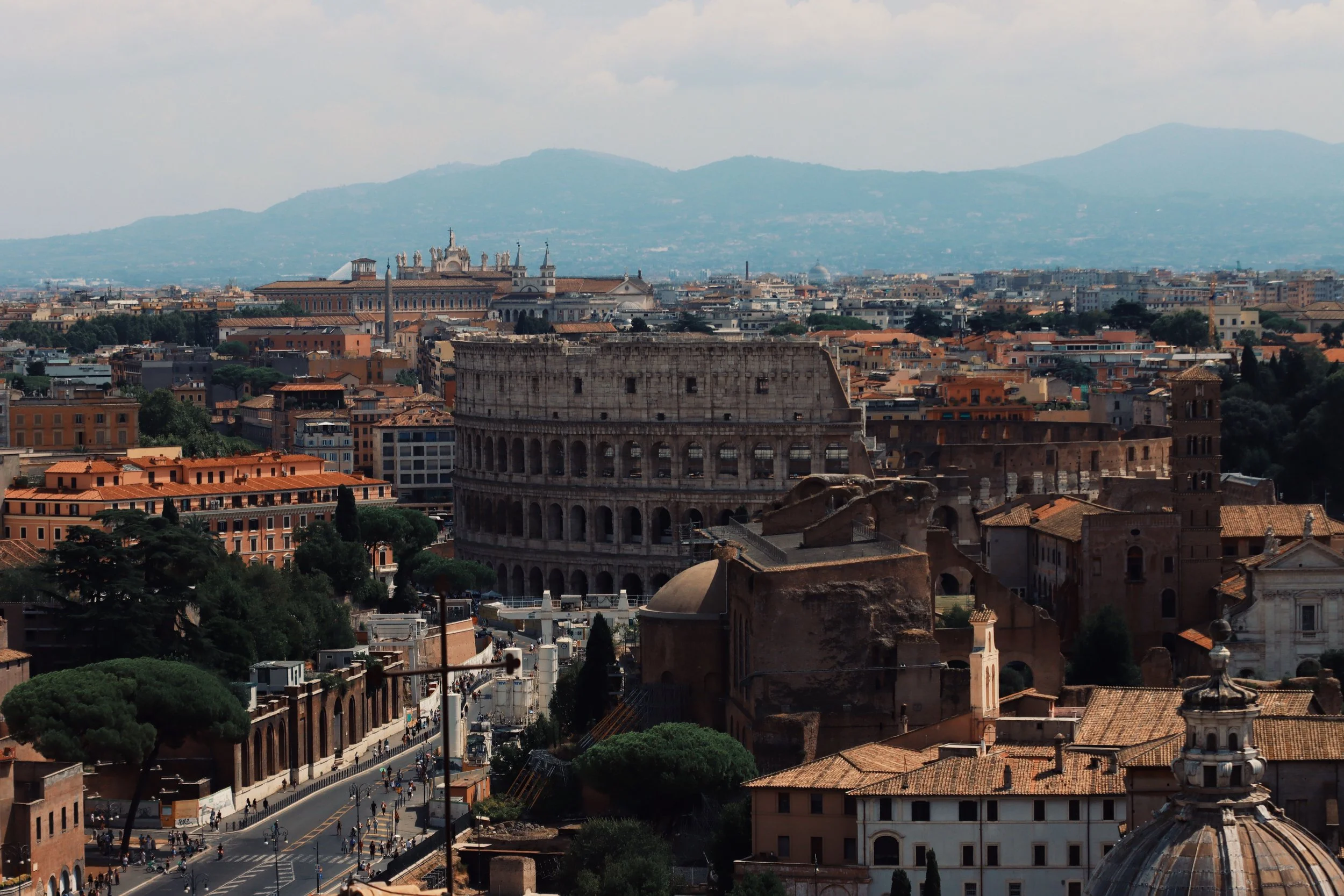
Photograph Efrem Efrem
There is a temptation, on arriving in Rome, to immediately start seeing things. The city has spent more than two thousand years accumulating monuments, masterpieces and ruins, and it can feel almost irresponsible not to begin ticking them off. The Colosseum before lunch, the Pantheon afterwards, the Vatican tomorrow. Comfortable shoes, water bottle, map.
Resist it, at least for a little while.
Rome is best understood between the things you came to see. It is in the ochre walls glowing in the late afternoon, the sound of a Vespa disappearing down a narrow street and the little bar where three men are drinking espresso at eleven in the morning. It is washing hanging above ancient stone and somebody smoking from a balcony. It is turning a corner in search of lunch and finding a Bernini fountain instead.
This is a city that rewards wandering.
MORNING
The Roman morning begins at the bar. Coffee is taken quickly and without ceremony, often standing, accompanied perhaps by something sweet and flaky and a few minutes of conversation. There are no enormous cups and very little lingering over laptops. An espresso arrives, does its job and disappears.
There is something wonderfully civilised about beginning the day this way. Find a café that looks as though it was there long before you arrived and will remain long after you leave. Order what everybody else is ordering. Drink it at the counter.
Then walk.
Rome is unusually generous to the person with nowhere particular to be. Streets open unexpectedly into piazzas. Churches sit quietly between shops and apartment buildings, their modest entrances concealing extraordinary things. Step inside them. Some of the greatest paintings in the world are hanging in dark corners without a ticket desk or queue in sight.
Caravaggio's paintings can still be found in the churches for which they were made. Seen this way, away from the white walls and careful lighting of a museum, they feel startlingly alive. Rome has a habit of placing the extraordinary amongst the ordinary and trusting you to notice.
THE LONG LUNCH
By early afternoon, the heat begins to dictate the pace.
This is not the moment for efficiency. Find a table outside, preferably somewhere slightly shaded, and surrender a portion of the day to lunch. Pasta, something cold to drink, perhaps another plate you had not intended to order.
A good lunch in Rome should interfere with your plans.
The pleasure is partly in allowing it to. We have become accustomed to treating meals while travelling as another thing to research, photograph and optimise. The restaurant has been selected weeks before arrival, its menu examined online, its most photogenic dishes already familiar.
There is another way. Walk until somewhere looks inviting. Sit down. Ask what is good.
Sometimes it will be wonderful. Occasionally it will not. Both make better stories than spending forty minutes comparing reviews on the pavement.
When lunch is finally over, do very little. Rome has survived emperors, invasions and several thousand summers. Whatever you intended to accomplish that afternoon can probably wait until five.
LOOK UP
Rome is a city that rewards looking above eye level.
There are balconies overflowing with plants, faded frescoes, shutters thrown open against the heat and stone faces staring down from buildings that have witnessed centuries of people hurrying beneath them. Even the colours seem particular to the city. Terracotta, tobacco, cream, dusty pink and the green of old shutters bleached by countless summers.
Nothing is quite pristine, which is part of its beauty.
Stone is worn. Paint peels. Statues have lost fingers and noses. Ancient columns have been absorbed into newer buildings as though nobody could quite be bothered to move them. Rome understands something that modern life often forgets. Age does not necessarily diminish beauty. Sometimes it is the thing that creates it.
Dress accordingly. Linen that wrinkles. Leather that has already been walked in. Sunglasses large enough to disappear behind. Rome is not a city that demands perfection.
It does, however, appreciate a little effort.
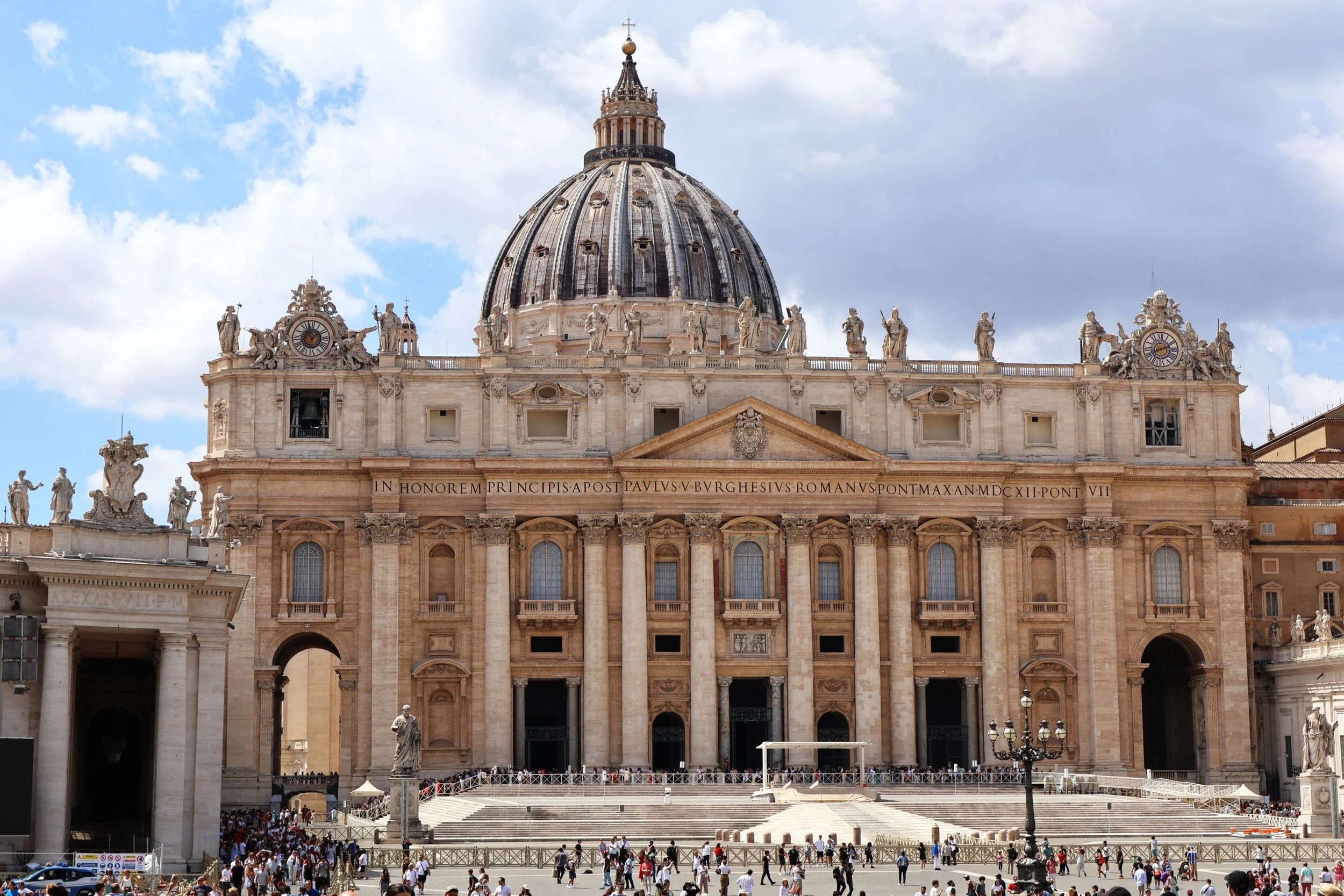
St. Peter's Basilica. Vatican City
THE SACRED CITY
It is impossible to understand Rome without Christianity. This is, after all, the home of the Vatican, the seat of the Catholic Church and a place to which pilgrims have travelled for centuries. Its faith is not confined to Vatican City. It is woven through Rome itself, into its architecture, its art and the rhythm of everyday life.
There are churches everywhere. Great basilicas that command entire piazzas and tiny chapels you might pass without noticing. Their doors open directly onto busy streets, offering a sudden transition from traffic and conversation into cool stone, candlelight and silence. Even for those who have not come to Rome as pilgrims, there is something profoundly moving about stepping inside.
Take the time to do it properly. Not simply to photograph a ceiling or identify a Caravaggio before moving on to the next thing, but to sit for a moment. Look at the worn marble beneath your feet and consider how many people have walked across it before you. Light a candle. Allow your eyes to adjust to the darkness. These are not museums built to house beautiful things. They are places of worship, and many have been so for hundreds, sometimes well over a thousand, years.
And then there is the Vatican. St Peter's Basilica is almost impossible to comprehend through photographs. Its scale only really reveals itself when you are standing beneath the dome, surrounded by marble, mosaics, monuments and Michelangelo's Pietà. Whatever one's relationship with religion, it is difficult not to be affected by the extraordinary human devotion that created such a place.
Rome's churches also contain some of the greatest works of Western art, but here art and faith cannot easily be separated. Michelangelo, Raphael, Bernini and Caravaggio were not merely decorating beautiful rooms. Their work was created within a Christian culture that shaped Rome for centuries, telling stories of sacrifice, redemption, suffering and hope to generations of people who stood in many of the same places we stand today.
Modern travel encourages us to consume beautiful things quickly. Rome asks for something different. Enter its churches quietly. Dress respectfully. Put the camera away occasionally. Sit beneath something made centuries before you were born and appreciate that it was made in the belief that beauty itself could point towards something greater.
In a city overflowing with things to see, some of its most memorable moments may come when you simply stop and look up.
FIVE O'CLOCK
Something happens to Rome towards the end of the afternoon. The worst of the heat loosens its grip and the streets begin to fill again. Chairs appear outside bars. Shop doors reopen. Shadows grow longer across the piazzas.
This is the hour for an aperitivo.
Order something bitter and cold and take the table facing the street. The important thing is not necessarily what you drink. It is the act of stopping.
Watch people.
Rome is very good for this. Priests and tourists, immaculate older women, teenagers on scooters, men who appear to have been wearing the same perfectly cut jacket since 1974. Nobody seems particularly concerned with providing entertainment, which makes them considerably more interesting to watch.
Stay for another.
DRESS FOR DINNER
Go back to the hotel before dinner.
Shower away the heat of the afternoon. Change your clothes. Put on the thing you brought because you hoped there might be somewhere worth wearing it.
There is something increasingly luxurious about changing for the evening. Not because a restaurant demands it, but because the day feels different when you mark its passing.
Rome makes a convincing case for dressing up.
Perhaps it is the architecture. Perhaps Italians simply understand that clothes are allowed to contribute to the pleasure of being alive. Whatever the reason, a jacket does not feel excessive here. Neither does a dress that would have seemed slightly too much at home.
Dinner should be late enough that you are properly hungry again. Find somewhere with tables spilling onto the pavement. Order simply. Pasta does not require reinvention when it has been made properly for generations.
And put the phone away.
There will be another plate of carbonara.
There will not be another version of this particular evening.
ROME AFTER DARK
Walk home.
This may be the best advice anyone can give you about Rome.
At night, the city changes again. The day's crowds thin and monuments that seemed almost overwhelmed by their own fame regain something of their mystery. Stone glows beneath streetlights. Fountains continue running in empty squares. Somewhere, somebody is still eating dinner.
Take the long way.
You may pass something you had intended to visit tomorrow and discover that seeing it accidentally at midnight is better than seeing it deliberately at noon.
That is the great pleasure of Rome. For all its importance, it does not need to be treated reverently every moment. History exists alongside ordinary life. People lean against ancient walls to send messages. Children kick footballs across piazzas. Laundry dries above archaeological ruins. Two thousand years of civilisation provides the backdrop for somebody taking the dog out.
Rome is not preserved behind glass.
It is being lived in.
Perhaps that is why the city stays with you. You arrive determined to see as much as possible and leave remembering the things that were never on the list. A coffee drunk standing up. A church entered because it was cool inside. The sound of plates being cleared from a table late at night. A street you never learned the name of.
Somewhere along the way, you stop trying to see Rome.
You simply spend a few days in it.
CUTLER RECOMMENDS
A few addresses worth remembering in the Eternal City.
SLEEP
Opened in 1925 and long associated with artists, writers and filmmakers, it has the kind of old world glamour that cannot easily be manufactured. Stay for the beautiful rooms, the hidden courtyard and the feeling that somebody interesting may have occupied your table fifty years before you.
COFFEE
SANT'EUSTACHIO IL CAFFÈ
Go in the morning and visit Antico Caffè Greco on Via dei Condotti. Founded in 1760, its red velvet rooms have welcomed generations of writers, artists and musicians. This is coffee with a little ceremony.
LUNCH
A few steps from the Pantheon, Armando is the place for proper Roman cooking. Come hungry, order the classics and allow lunch to interfere with whatever you thought you were doing that afternoon.
Part salumeria, part restaurant, part wine cellar and entirely capable of consuming several hours of your day. Come for beautiful produce, Roman pasta and a bottle of something good. Do not make ambitious plans for afterwards.
APERITIVO
Even if you are not sleeping at Hotel Locarno, return for a drink. Take a table in the courtyard, order something cold and allow the afternoon to become evening.
For something a little grander, Stravinskij Bar at Hotel de Russie offers aperitivo in the hotel's beautiful Secret Garden, hidden just off Piazza del Popolo. Dress accordingly.
DINNER
There are restaurants for which changing before dinner suddenly feels entirely reasonable. Pierluigi is one of them. Set on Piazza de' Ricci and dating back to 1938, it is elegant without feeling sterile, with tables spilling into the Renaissance square and a particular reputation for fish and seafood.
Go late. Wear the good outfit.
AFTER DARK
When dinner is over but going home feels premature, head to Trastevere. Jerry Thomas Bar Room takes its cues from the Orient Express and the great European bars of the 1950s, sixties and seventies. Settle into a chair, order a proper cocktail and stay for another.
FOR ART
Rome's greatest works of art are not all hanging in museums. Step inside the Church of San Luigi dei Francesi and find the Contarelli Chapel, where three paintings by Caravaggio tell the story of Saint Matthew.
Stand before The Calling of Saint Matthew in the church for which it was painted. Look at the extraordinary shaft of light cutting across the canvas and remember that this is not simply a gallery containing religious art, but a living place of worship.
Put your phone away and stay a little longer.